WPL 2026 PREVIEW: A T20 World Cup dress rehearsal


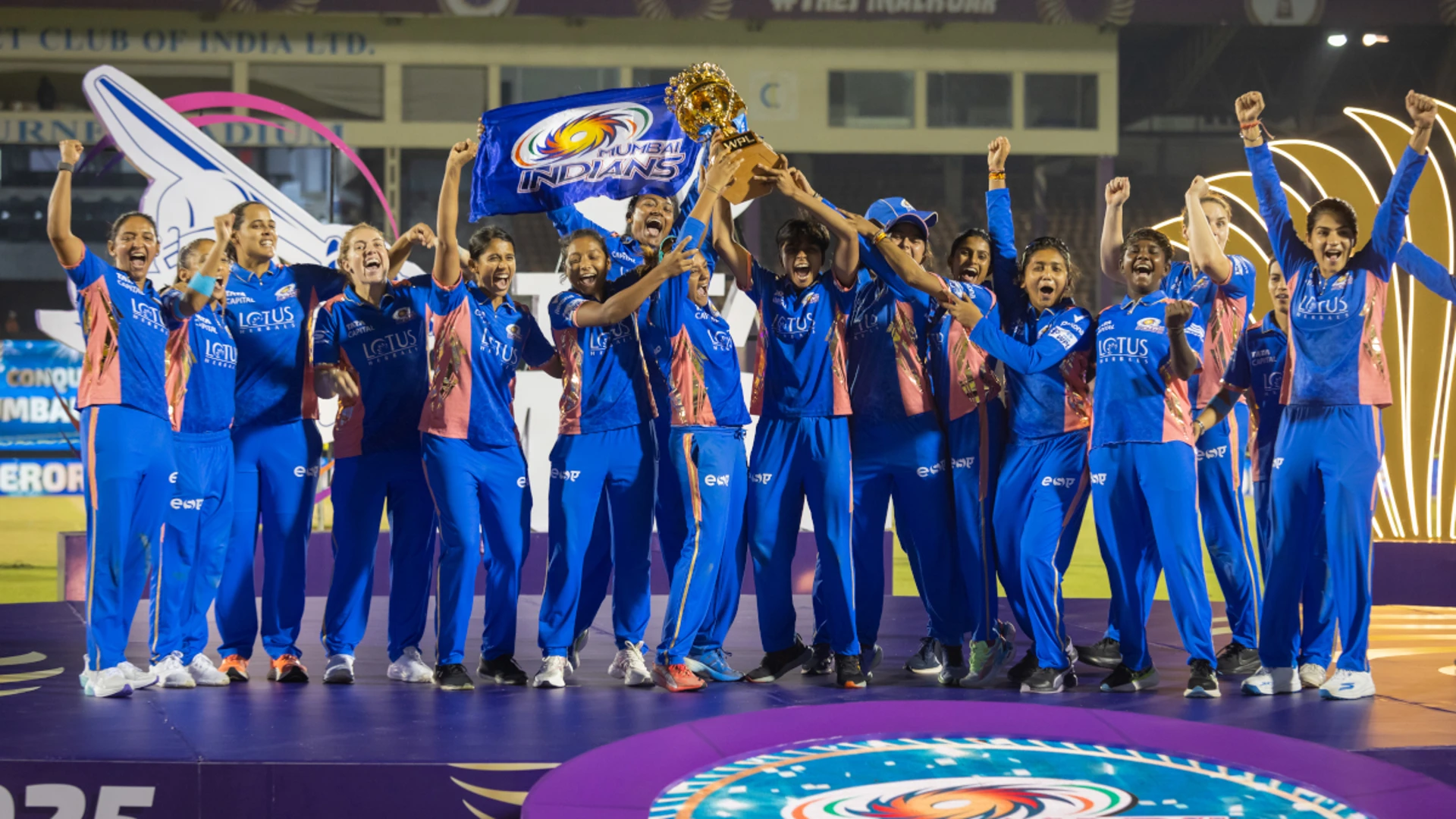
As the Women’s Premier League (WPL) 2026 prepares for its fourth season, the pressure is everywhere. A tighter calendar, reshuffled squads, sharper narratives, and a changed world with India having recently won their first World Cup all shape the backdrop.
Played across just two venues and contested between five teams, the competition has grown rapidly, much like the women’s game itself. In its inaugural season, matches were free to attend; now they are ticketed. While revenues on those sales are marginal, the shift signals growing demand and commercial confidence as the league accelerates.

Advertisement
The tournament retains its familiar double round‑robin format, with all five franchises meeting each other twice in the league phase. Once the group stage concludes, the top three sides advance to the play‑offs. The team finishing first earns a direct berth in the final, while the second‑ and third‑placed teams contest the Eliminator to determine the other finalist.
Another 𝙨𝙥𝙚𝙘𝙞𝙖𝙡 season beckons 🌟
🎥 Our 5⃣ captains express their excitement for #TATAWPL 2026 in 𝗪𝗵𝘆 𝗦𝗽𝗲𝗰𝗶𝗮𝗹 🙌#KhelEmotionKa | #MIvRCB pic.twitter.com/Ix83VOlUhm — Women's Premier League (WPL) (@wplt20) January 9, 2026
In the wake of India’s World Cup glory, this tournament doubles as a dress rehearsal for the ICC Women’s T20 World Cup scheduled for June in England. Mumbai Indians continue their quest for dynasty status. Delhi Capitals want to prove they are not eternal bridesmaids.
Royal Challengers Bengaluru are forced to reinvent after losing Ellyse Perry. UP Warriorz have imported Meg Lanning’s captaincy aura. Gujarat Giants are still trying to prove they belong.
South Africa’s players are scattered across the franchises, using the WPL as both a proving ground and a pressure simulator, sharpening their skills against the best in the world before stepping onto the global stage.
Laura Wolvaardt headlines the contingent at Delhi Capitals. She is tasked with anchoring the top order and providing stability in a side that has often faltered in finals. Her ability to absorb pressure and build innings will be crucial not only for Delhi’s campaign but also for South Africa’s prospects against Australia and India in the World Cup group stages.
Alongside her is Marizanne Kapp, retained as one of the most reliable all‑rounders in the league. Kapp’s dual role with bat and ball makes her indispensable, and her performances in the WPL will directly influence South Africa’s balance in England.
Shabnim Ismail, the veteran pace spearhead, continues with Mumbai Indians after playing a decisive role in their 2025 title run. Her rhythm and fitness are non‑negotiable for South Africa’s World Cup ambitions, and the WPL offers her the perfect platform to fine‑tune against elite batters.
Chloe Tryon, meanwhile, joins UP Warriorz, bringing her power‑hitting and spin option to a side captained by Meg Lanning. If Tryon finds consistency in the middle order, she could become the X‑factor South Africa have long needed.
Nadine de Klerk rounds out the core group at Royal Challengers Bengaluru, where her adaptability as an all‑rounder will be tested in Perry’s absence. Her ability to plug gaps and deliver under pressure is exactly what South Africa will require in English conditions.
5️⃣ Captains 🫡
1️⃣ Iconic Backdrop 🤩#TATAWPL 2026 Awaits ⏳#KhelEmotionKa pic.twitter.com/VuBw4PWDxY — Women's Premier League (WPL) (@wplt20) January 7, 2026
Beyond the South African lens, the WPL 2026 carries its own narratives. Mumbai Indians, led by Harmanpreet Kaur and powered by Nat Sciver‑Brunt, are chasing dynasty status with a third title in four seasons.
Delhi Capitals, perennial finalists but never champions, are attempting to break their bridesmaid curse under Jemimah Rodrigues’ leadership. Royal Challengers Bengaluru must reinvent themselves after Perry’s withdrawal, while UP Warriorz look balanced with Lanning’s captaincy and Sophie Ecclestone’s spin. Gujarat Giants, bolstered by Renuka Singh’s pace, remain in search of a stable identity.
For South Africa, however, the league’s significance lies less in which franchise lifts the trophy and more in whether their players arrive at Lord’s in July battle‑hardened. Wolvaardt’s rhythm, Kapp’s balance, Ismail’s pace, Tryon’s power, and de Klerk’s adaptability form the spine of South Africa’s World Cup campaign.
Their WPL performances will be scrutinised not just by franchise fans but by selectors and supporters back home, eager to see if the Proteas can finally convert promise into silverware.
🎥 𝘾𝙝𝙖𝙢𝙥𝙞𝙤𝙣𝙨 through the years 🏆
Who will celebrate with the coveted trophy at the end of #TATAWPL 2026? 🥳
Catch the TATA WPL from January 9 on @StarSportsIndia and @JioHotstar 💻#KhelEmotionKa | @mipaltan | @RCBTweets pic.twitter.com/0WRwwIP9TE — Women's Premier League (WPL) (@wplt20) January 5, 2026
The WPL also underscores the broader evolution of women’s cricket. It normalises women in leadership roles, creates pipelines for domestic talent, and forces cricket boards to confront the economics of the women’s game. By its fourth season, the league has carved out its own identity — and in 2026, it doubles as the most important dress rehearsal for the global stage.
Advertisement