

There’s been a lot of talk of chasms at this Rugby World Cup and the last weekend of the Pool phase underlined some of those.
 Ireland’s emphatic win over Scotland, something that was predicted but which was even more convincing than expected, served to once again underline the ridiculousness of a draw that sees the top four teams in the world pitted against each other in the quarterfinal stage. There’s a gap as wide as the Pacific Ocean between the top four and the rest.
The chasm in tempo, intensity and sheer quality between the late game in Paris on Saturday and the ones involving the teams in the other part of the draw was marked. Yes, the England game against Samoa was exciting, but it wasn’t a game of great quality, with England remaining the kings when it comes to attacking ineptitude and boring people to sleep.
For everyone to be properly engaged, and we’re talking television audience here, which makes up the bulk of the viewership, and not the people who attend the games and appear to revel in the carnival atmosphere regardless of who is playing, World Cups require more games like the one between Ireland and Scotland.
It needs less of the lopsided games between tier one nations that have money and employ professional athletes who are primely conditioned and prepared and what we could call minnow nations who are on the opposite end of the scale when it comes to preparedness and go onto the big stage without any recent experience of playing top tier opposition.
WIDE GAP AND UNEQUAL PLAYING FIELD
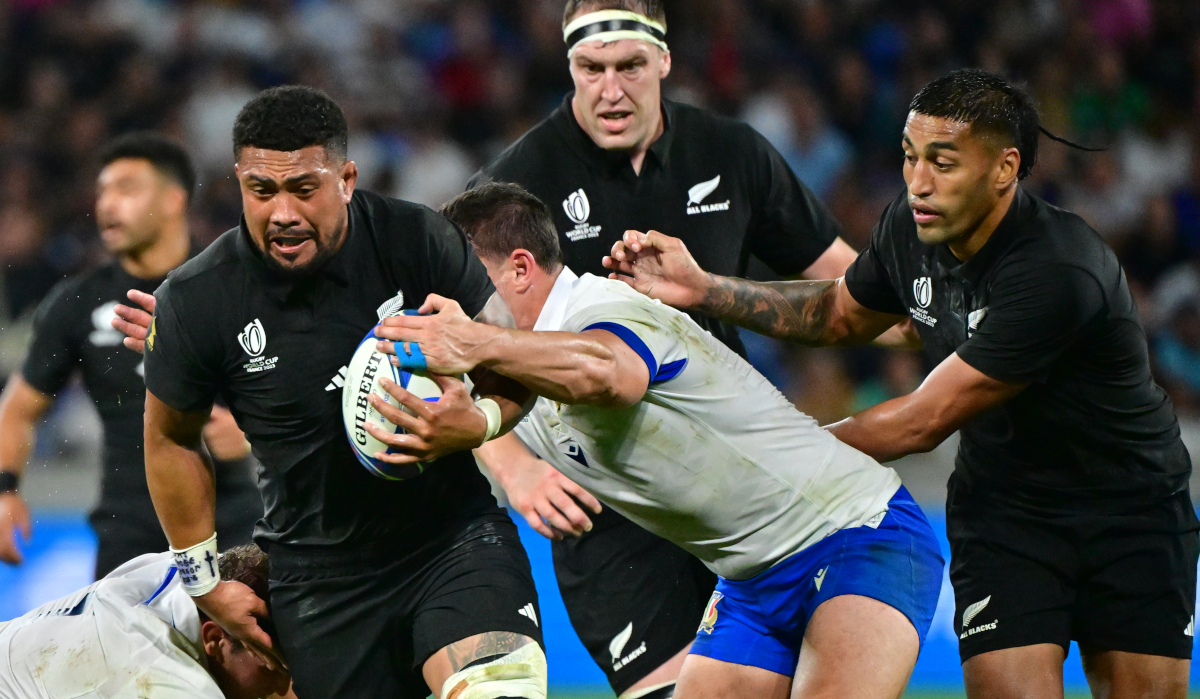
Namibia weren’t playing this week and neither were Chile, but the weekend did provide a reminder, at least initially, of the wide gap there is between the tier one nations and those that don’t play that regularly. Some may see value in watching the All Blacks win 73-0, as they did against Uruguay, but there won’t be universal appreciation, just as there wouldn’t have been for the other lopsided pool results.
If the World Cup is about selling the sport, you need more box office games, like there were on the first weekend when four games with proper significance and edge were played, to keep eyes engaged and to get people to plan their weekends around watching the rugby. They need to rival the other fare being dished up on television, such as the Premier League and, last weekend, the Ryder Cup.
THERE WERE A FEW OUTLIERS
Having said that, there were a few outliers to the theme that the games were mostly predictable, which they mostly were if you look at the quarterfinal line-up and compare it to what was expected. And in that regard, step forward Fiji and Portugal, the two teams that brought the group phase to an end in a thought provoking way.
Indeed, those who do see merit in big playing small should adopt the old Maurice Chavelier song, just trading Fiji or Portugal with his “little girls”. For the two teams, in different ways, did buck the trend and provide the counter-argument to the validity of having such a big field at the World Cup some legs.
Fiji did it at the level of play-off qualification, by knocking out Australia. Portugal, who were well beaten by the same Wallaby team the previous week, then went and edged out Fiji in a thrilling final game to the group phase. Mind you, Fiji weren’t too flush against Georgia the previous week either, and have lost some of the momentum they gained by beating Australia and being unlucky against Wales.
Fiji though provide an opposite case-study to most of the other teams that are roughly in the same league as Fiji, meaning teams that have been to many World Cups but don’t play that many games against top teams in the in-between years. The other two Pacific Island teams number among those, but have less exposure than Fiji.
Both Samoa and Tonga finished their participation at the World Cup strongly after playing poorly at the start. So for that matter did Japan, although they, like Samoa, were just short of what would have been famous victories against Argentina and England respectively.
Japan regressed at this World Cup from their stellar performance at the edition of the global event that they hosted in 2019, where they topped their group before losing in the quarterfinal round to eventual champions South Africa. But against both Samoa in their penultimate game and then against the Pumas they looked more like their old selves.
SAMOA AREN’T A NEW DEVELOPING NATION
Samoa are an interesting case study because those that would say they are evidence that World Cup exposure is good aren’t being factually accurate. Samoa, like Fiji, aren’t a nation that has suddenly just learned rugby and are now developing because of the exposure provided by a World Cup. They’ve both been in quarterfinals before, Fiji at the inaugural tournament in 1987 and again in 2007, and Samoa way back in 1991 and 1995.
Those long ago achievements pose the question about where they might be had they been given more exposure by World Rugby, formerly the IRB, after those initial successes, rather than starving them of games against top nations in regular competition. When last did Samoa come to South Africa, like they did before the 1995 World Cup? The answer is they did come once, for a quadrangular tournament in 2013. Fiji? I was at the test in Pretoria in 1996, when the Boks won 43-18, little did I imagine then that it would be the last time I’d see that Fijians play on South African soil.
Fiji were the one Pacific Island nation that hit this tournament running for one simple reason - they do get exposure now through their participation in Super Rugby. Samoa, who way back used to be part of what was known as the Super 10, and visited SA regularly during those years, don’t. Neither do Tonga.
THREE GAMES IN THEY STARTED TO GEL
So those teams, starved of international rugby to build up their togetherness as a unit, struggled at the start of the World Cup, even though both of them had names on their team-sheet that suggested they should do better. Three or four games into the tournament they started to gel, and the result was clear to see on the final weekend.
It was probably the same for Portugal. Even Romania, so poor against the Boks and so inferior to their predecessors of the amateur era, showed glimmers of improvement in their 2023 swansong game against Tonga.
But what happens next? Some of the English media spoke to the Samoan coach in the buildup to the England game against Samoa and he said he didn’t know when his team’s next game was. That was reminiscent of Jamie Joseph, the Japan coach, when he was asked the same question after his team exited the 2019 event. He implored World Rugby to give them more games, which they did relative to what the Samoans etc were given, but not enough.
Let’s be fair, Covid did throw rugby a horrible curve ball in this past World Cup cycle. Georgia came to South Africa for two tests ahead of the 2021 British and Irish Lions series and ended up playing only one game because of the intervention of the pandemic.
RADICAL CHANGE NEEDED FOR BIG RWC FIELD TO WORK
Georgia too looked better at the end of their World Cup campaign than they were at the start, and could have beaten Fiji with just a bit of luck. That adds further fuel to the argument that if, and it is a big ‘if’ in my view, we are going to have a 20 or 24 team event in Australia in 2027, then World Rugby needs to do something radical both in terms of financing the developing nations and slotting them into the international itinerary so that they are up to scratch from the start next time.
Of course we know that latter part isn’t going to happen as the world Test Championship, contested by the top 12 teams, is going to start between now and 2027, and the two tiered nature of that league, divided into 12 elite and at 12 team secondary competition, means Samoa won’t play England again outside of a World Cup at least until 2030. And then it will only happen if Samoa win promotion to the top tier, by which time the gap between the haves and have nots should have widened further.
If World Rugby is going to run the league basis 12 and 12 competitions they might as well do it for the World Cup too because the system isn’t going to promote and facilitate competitive games between the top and the bottom in Australia or for that matter the United States in 2031.
ABSENCE OF USA AND CANADA A CONCERN
Mention of the United States cues another point about the value of World Cup exposure - they and Canada were far more competitive at World Cups back in the 1990s, at the end of the amateur era - remember the infamous Battle of Boet Erasmus in 1995 - than they are now.
Neither of them made the cut for this World Cup, which puts them in the same ambit as Samoa as nations that haven’t kicked on from promises of growth shown at World Cups two or more decades ago. Why? The fact is we haven’t seen Canada in SA since 2000, John Smit’s debut test, and the last Bok game outside of a World Cup against the Eagles was in Texas a year later, 2001.
We’re not picking on South Africa here, the USA has rarely been in action against any of the other top tier nations either. We know there is talent in their game though as we see the evidence on the international Sevens circuit.
With the USA set to host in 2031, their growth will now become a concern for World Rugby, and it may be why there is talk of an expansion to 24 teams in 2027. To safeguard the Eagles’ participation. But if they want developing rugby nations to justify their presence at future World Cups by being competitive, there needs to be a wider focus than just the future hosts. And it should start with those teams that did show potential at France 2023, like Portugal.
There’s also a need, as the Samoan coach suggested, to get rid of the subconscious bias of referees, but that is a subject for another article…
Final round Rugby World Cup Pool game results
New Zealand 73 Uruguay 0
France 60 Italy 7
Wales 43 Georgia 19
England 18 Samoa 17
Ireland 36 Scotland 14
Argentina 39 Japan 27
Tonga 45 Romania 24
Portugal 24 Fiji 23