

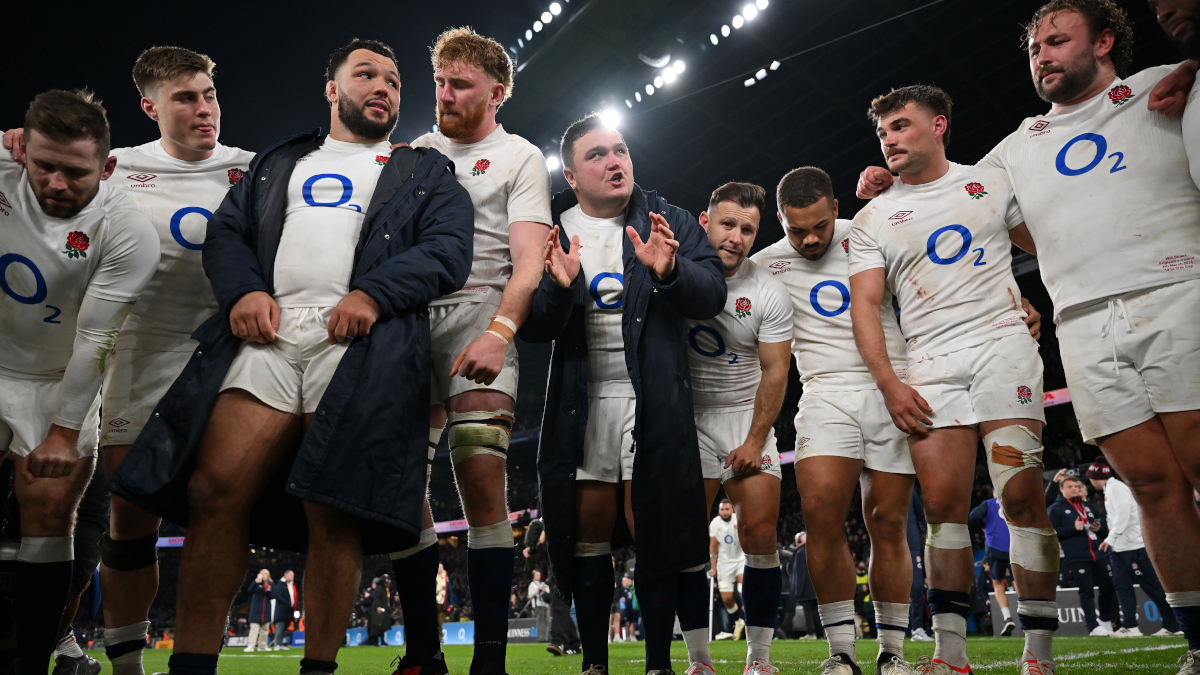
When England ended the Irish dream of an historic successive Grand Slam in the Guinness Six Nations it should have confirmed to any who doubted it just what a massive achievement the Springbok World Cup victory in France last October was.
You still come across people or, in particular, foreign critics, who make a lot of the fact that in each of their World Cup playoff games the Bok winning margin was as low as it could possibly have been - one solitary point.
And the semifinal against England, as it was at the time, is often thought of as a backward step for the Boks. They were indeed fortunate to come away with the win. But then while England found themselves out of the top four World Rugby rankings going into the RWC, it might also have been wrong to characterise them as a team incapable of producing an 80-minute performance way beyond that ranking.
For England, the World Cup semifinal was their final. They had an easy passage to get to that point, but that was the game that would define their tournament. The Boks, by contrast, had beaten the hosts in a tight and emotional game the previous weekend.
Plus they’d come out of the Pool of Death, with someone reminding me the other day that even Tonga were tough opponents from a physical aspect as the island nation produced their game of the tournament against the champions. The Boks did well to win that game by the margin that they did.
DOING WHAT IRELAND DIDN’T MAKES SA WORTHY CHAMPS
But back to England. When they play with fire in their belly and with the latent anger and the desperation that drove their performances against both South Africa at the World Cup and against Ireland a few days ago in the Six Nations, they are right up there as opponents. And it has always been thus. In the eras where the All Blacks have been considered imperious and invincible, it has often been England at Twickenham that have checked them.
The conditions suited England in the RWC semifinal and after matching and overcoming the French juggernaut just days earlier, the Boks were always going to find it hard to match that intensity.
Admittedly that game was at a neutral venue whereas England’s most recent effort game was at Twickenham, but that they managed to do what Ireland failed to do this past weekend by finding a way out of the hole they found themselves in just underlined their right to be recognised as worthy world champions.
I am not forgetting that New Zealand went down to 14 men in the final, but then I am also not forgetting that before Sam Kane was dispatched for his illegal tackle, the Boks were actually dominating the game. Sometimes a sending-off brings a weird unexpected dynamic, with the team that has been pinged being galvanised while it heaps pressure on the other side. That was one of those occasions.
The point is that no World Cup winner has had to take the path the Boks did to win rugby’s Holy Grail. France in their pomp, a highly motivated England a week later and then the All Blacks - ask anyone ahead of time if the South Africans were going to negotiate those hurdles and you’d have been laughed at. Well, at least by those who recognise that England are capable of a one-off.
WHY THIS ENGLAND WIN MAY NOT BE A ONE-OFF
So was the win over Ireland a one-off? For those of us not born and reared in England the English media can be infuriating with their tendency to overhype one performance. If there is any nation that can become world beaters from also-rans overnight, it is England, and not just in rugby.
Powering down the wing 😤🔥 pic.twitter.com/IJtCllj4qP
— Guinness Men's Six Nations (@SixNationsRugby) March 11, 2024
A few weeks ago I was reading English cricket writers who I respect and read because of their knowledge who, on the basis of their team’s victory in the first test of the series against India, suddenly made them favourites to win. These weeks later, with England having capitulated so tamely in going down 4-1, those words written after that first triumph seem so stupid. India have not lost a home series for 12 years and there’s a reason for that.
So it isn’t surprising that England have gone from being heavily criticised and written off by their own media to now being at the start of a new winning era. It took 80 minutes for that to happen, and in reading some of the triumphalism subsequent to what was indeed an epic game (let’s face it Ireland have also been pretty talkative so aren’t much loved), it only reinforced what a nightmare it would have been for the rest of us had England got home against the Boks and made the global final.
A positive result against Siya Kolisi’s team would have put out the message that the England of last October were on the right track. That their game plan was the right one (well it was in the conditions encountered on the day). It is because there are strong indications though that the England we saw play Ireland is a different England to the one that played in the World Cup that for once I do agree with the hype being evidenced in the English media.
England have looked for most of the past few seasons like they are happy to conform to the tag that I remember them being given way back in the 1980s and early 1990s of being “boring, boring England.”
BORING WAS IN THEIR DNA
It didn’t seem likely that under Steve Borthwick they’d shake off the perception that a safety-first, grinding approach was just their DNA. Watching them at the World Cup was at times like watching paint dry.
But it is astounding what a difference a few strategic shifts and key selections can make to a team’s attacking dynamic. When Borthwick selected a running, counter-attacking fullback in George Furbank it sent out the message that he wasn’t going to try and win by boring his opponents to death.
His failure to rush Marcus Smith into the starting line-up once the Harlequins star had recovered from injury appeared to send out the opposite message, but against Ireland George Ford was also a different player to the one that kicked everything at the World Cup. He lined up closer to the gainline and employed his not-insignificant distribution skills, and it made England look like an entirely different team.
And with Smith making a good impact off the bench as a runner before he won the game with his last-gasp drop goal, it does appear England are onto something. They may not win this Six Nations, though it is possible as they lie second just four points behind Ireland with one game to go, but against Ireland there were strong indicators that the penny has dropped for them.
Maybe the next time the Boks face them, which will be at Twickenham in November, they won’t be couched as the no-hopers they were before the sides met in Paris four and a half months ago.