

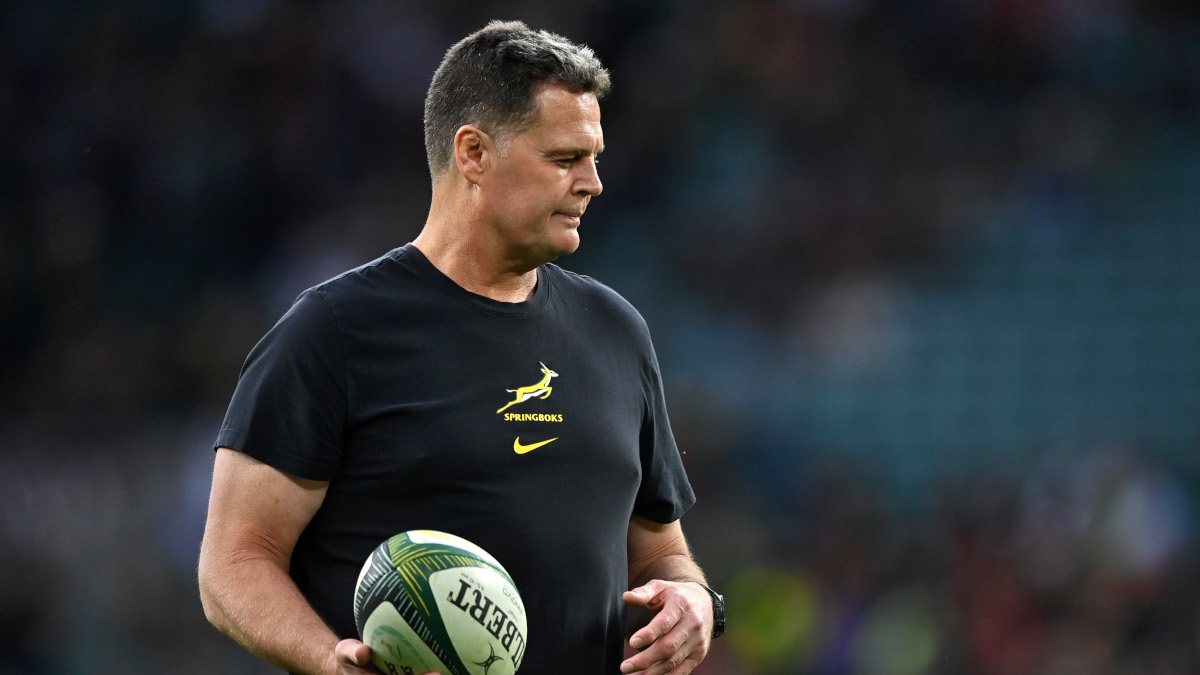
The UK scribes are getting their excuses in early when it comes to the imminent implosion of the challenge of the Home Union nations for this year’s Guinness Six Nations. England and Ireland, in that order, were the favourites to challenge France, but both have been blown out of the water already when it comes to any pretensions of registering a Grand Slam.

In short the argument is that England have several top players who were in Australia last July and August with the British and Irish Lions, like skipper Maro Itoje, who aren’t firing because they are fatigued.
Across the Irish Sea the decline of Ireland is generally met with more holistic appraisal. The top Irish players, too many of them, have just seen too many decorated winters, and when you age sometimes you are less hungry to put in what is required to keep crossing new horizons.
There is also a leaning though towards the Lions theory as a supplementary angle to the line on ageing and the need for renewal. There were 18 Irish players on the Lions tour of Australia last July and August, and the team was coached by Ireland mentor Andy Farrell.
They are actually valid excuses. In the Six Nations tournaments that have followed the last six Lions tours, France have won four of them. That there will be a quadrennial fall off from teams that provide the bulk of the Lions players makes sense, and we’ve seen it from Leinster this season. They look well short of where they were.

However, mention of Leinster reminds me of a conversation that the then Sharks coach John Plumtree told us he had with his Leinster counterpart Leo Cullen in Dublin last October. According to Plumtree, Cullen was complaining about he had most of his top players missing in the pre-season, and blamed his team’s slow start on that.
He was right but didn’t get sympathy from Plumtree, because that is the case every season for the Sharks because they have so many Boks on their books. Plumtree was working with eight players at a training session I attended back in September. Which was probably a lot less than Leinster had.
The Boks play in the Castle Lager Rugby Championship when the UK and Irish players are usually resting. A year when there is a Lions tour is the only time that problem is faced by the UK and Irish teams, and they do still actually get a small off-season.
When Cullen was speaking to Plumtree it was three weeks into the URC and it was only then that his Lions were starting to return to training and playing.
Fatigue is the biggest obstacle to SA’s chances of a third successive World Cup title next year. Fatigue may also have played a big part in the Sharks’ struggles earlier in the season.
Was it a coincidence that it was after the players were given the two January Champions Cup games that the Durbanites produced their best two performances in ages against the Stormers?
IRELAND TRANSITION IS YEARS BEHIND RASSIE’S
When I watch Ireland play I can’t help thinking how lucky South Africans are that the Springbok coach Rassie Erasmus is as far ahead of the transition curve as he is. Some of the Ireland squad members deny that the team is on the decline, but it is impossible to deny if you look at the stats of their last two years.
Two years ago, although they had been knocked out of the World Cup in France in the quarterfinal stage, Ireland were still riding the wave. They were going for their second successive Grand Slam in the Six Nations, something they were only denied by a last-gasp Marcus Smith drop-goal in their game against England at Twickenham.
They were still good enough to go on to win a second successive Six Nations title, and also good enough to win against the Boks in Durban a few months later.
That win at Kings Park though might just have been the end of a golden era for Ireland, for since then they’ve been well beaten by New Zealand twice, humiliated by France twice, bullied by South Africa in Dublin, and they were lucky to get over the line against Italy at the AVIVA Stadium last weekend.
Coach Farrell is trying new things and there has been an infusion of form players over previously rated players, mostly from the Ulster team that is doing well in the URC, and there were some good moments from those players particularly late in the game against Italy.
Put simply, the Irish are at the start of a difficult transition, something that is inevitable at some stage for all teams.
But, with the next World Cup now just 18 months away, that transition has started too late. Farrell may have been delaying the start of his transition until after he’d taken his tried and trusted players to Australia with the Lions, but it has ensured he has fallen way behind Erasmus when it comes to the process of renewal.
It was accelerated at the start of this World Cup cycle, but the transition for Erasmus started in the last cycle. Remember that game against Wales in Bloemfontein in 2022?
When Jacques Nienaber, as head coach working with Erasmus as director of rugby, changed almost the entire team. They lost late in the game, but that was the start of something that saw the Boks a few years later win two tests in Australia with what some might have described as a second team.
While Farrell is struggling to replace the world class Johnny Sexton at flyhalf, Erasmus already had Manie Libbok establishing himself as an alternative to Handre Pollard in November 2022, and only a few games into the current RWC cycle he was entrusting a 22-year-old, Sacha Feinberg-Mngomezulu, with as many caps at that point as fingers on one hand, to wear the No 10 against New Zealand at Ellis Park.
The seminal moment of Erasmus’ transition arguably came in Wellington last September. When he chose a young team, without Pollard, without Etzebeth, without Jesse Kriel and without Damian de Allende and several others, for the game against the All Blacks many considered it a gamble. The Boks ended up winning 43-10, in so doing inflicting on the All Blacks their biggest ever defeat.
That’s where Erasmus is so far ahead of Farrell, and arguably all the other coaches too, with maybe France’s Fabien Galthie being the nearest to doing what he is doing after sending a B team to New Zealand last year.
RASSIE THE SOOTHSAYER
Not only is he an astute coach, but he is a soothsayer too. Okay, maybe we should wait to see where Italy go from here, but apparently Rassie said at some point that he thought Italy were good enough to finish second in the Six Nations.
Which given how they’ve gone so far, beating Scotland and being unlucky not to get at least a share of the spoils away against Ireland last week, was not a bad dark horse bet.
Rassie was speaking from experience of course, with the Boks being stung by the driving maul try Italy scored against them, and the general Italian second half dominance, when the two teams met in the first of three tests the nations played against each other at Loftus last July.
The Boks had to dig deep to beat them in Italy on the November tour, but the caveat there was that they had to play much of the game with 14 men after the early red card to Franco Mostert. That achievement looks even more laudable now.
FRANCE A REMINDER OF WHY BOKS NEED THE BROWN EFFECT
A commentator in the France annihilation of Wales summed up what makes Fabian Galthie’s men such a threat to all comers, even South Africa, when he commented that “France have the power game when they need it”.
That was a reflection of how well rounded the French game is. On the day the French backs ran Wales ragged, but on another they are perfectly capable of bullying opponents with their forwards in the manner the Boks did Ireland in November.
They got loose in the second half otherwise would have posted more than 54 points against Wales in Cardiff, and it was a similar story against France in Paris the week before.
The French have put together their attacking game with stunning effect in the first two rounds of the Six Nations and it is hard not to reflect that the all-roundedness of their game is a reminder of why the Boks needed the Tony Brown effect in the first two years of this World Cup cycle, and will continue to do so going forward.
THE SHARKS AND SCOTLAND ARE IN THE SAME PLACE THIS WEEK
Those who read this column last week will know that I didn’t share the general surprise that Scotland outplayed England at Murrayfield.
Apart from a gnawing feeling that English rugby was being set up before this Six Nations like their cricketers were before the recent Ashes series in Australia, meaning that their media was behaving like they’d already won something when they hadn’t, Scotland are always a different animal in Calcutta Cup matches.
And until later in March, when they get a chance to put Munster to the sword, the same can be said about the Sharks when it comes to derbies. The two back to back wins over the Stormers were seen as such concrete proof of a turnaround by the Sharks bosses that they this week announced that JP Pietersen will take on the role of permanent coach rather than interim coach when the Sharks go to Johannesburg to face the Lions.
Last year the Sharks beat the Bulls home and away, in other words did what they have just done to the Stormers, but weren’t at the races when they went in as favourites against the Lions after that. They produced one of those Sharks displays that just lacked energy and they were thumped. And then they lost narrowly in the return game in Durban the following week.
Even though the Sharks still ended third on the log, those two games effectively changed the narrative of the Sharks’ season. It was after that the questions about the lack of attacking shape, the listlessness of some of the performances and the coaching staff started.
In Scotland right now the win over England is being celebrated but there’s also a general acceptance that they need to beat more than just England every year to ease the pressure being exerted on their coach Gregor Townsend.
Like the Sharks, they are playing a team this week they should beat, in this case Wales. The focus from both sets of supporters should be on whether they play with the same intensity against the Lions and Wales respectively as they did against the more rated Stormers and England.
ZIMBABWE’S CRICKET WIN SPOTLIGHTED A WORLD RUGBY FAILING
So more time was spent in front of the television last week, and I counted myself lucky to have been able to watch both the double Super Over World Cup T20 pool clash between the Proteas and Afghanistan, which was focused on in Striking It Rich last week, and the excellent Zimbabwe win over Australia a few days later.
It was a classy performance from Zimbabwe, who scored 169 for two on a difficult wicket when they batted, and then had Australia four down in the power play. It will be remembered as the standout performance of many competitive displays from the smaller nations.
The T20 World Cup is very different from the Rugby World Cup, particularly next year’s in Australia where there will be 24 teams in a Pool stage with almost no jeopardy, in that many of the games between smaller nations and bigger nations are competitive.
Much of that is down to reality that the shorter the format, the more chance there is of an upset and an unrated team being more competitive. The rugby equivalent is Sevens, and I have to agree with my colleague Brenden Nel, who said in last week’s Talking Point that World Rugby have made a massive mistake in excluding the likes of Kenya from the top table of the World Sevens Series.
I watched a bit of the Second Division Sevens event played in Nairobi last weekend and on the televised evidence there was a big crowd (full house of 24 000 both days) and a great atmosphere. That was an indicator of how popular rugby in the Kenya is and it is a big miss on World Rugby’s part that Kenya and others can’t grow the interest in the sport in their countries more by being part of the main circuit.
Judging from what was seen in Nairobi, there should be a World Sevens Series event staged there. I always thought that growing interest in the sport in nations like Kenya was, like the global T20 event is in cricket, the main point of it. To me the World Sevens Series kind of loses a bit of relevance if development is not its mission.