Ask any Star Wars fan about the pod racing scene on the planet Tatooine, and chances are that they’ll rave about it. The sound, the cinematography, and the sheer thrill of seeing fantasy vehicles take on each other over some tricky terrain… Which is interesting, because with the first round of the 2022 Formula 1 season upon us, all attention has turned to the pods.
* Get DStv to watch all the F1 action! *
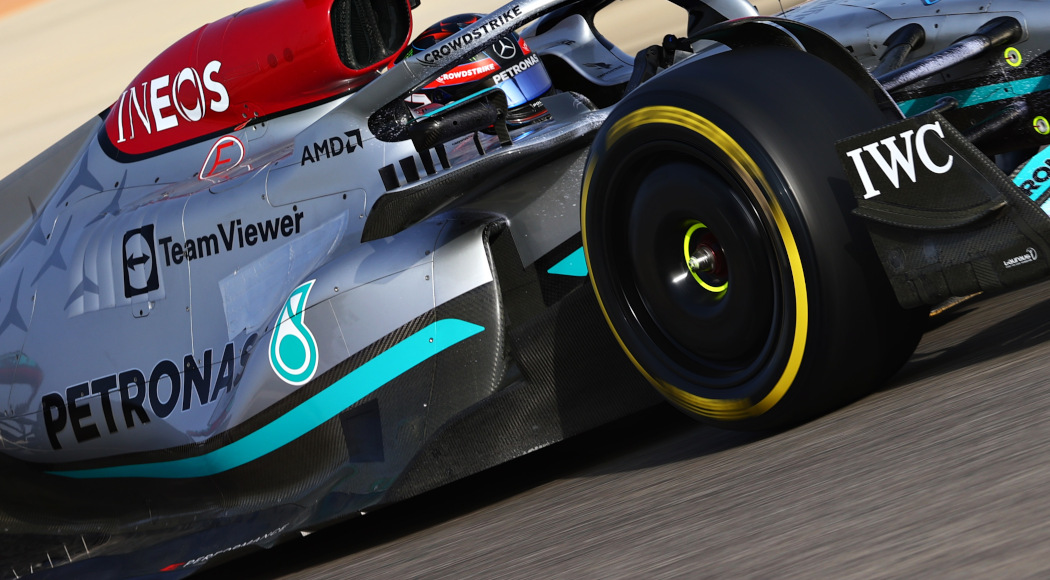
More specifically, the sidepods of the new F1 cars, which have been an area of intense scrutiny by both F1 insiders and fans. This is because of the radical new designs that have made their way onto the 2022 cars, and especially the slimline, are-they-even-legal sidepods of the Mercedes W13. But what are sidepods, and why have they suddenly become a topic for conversation?
As with many components on F1 cars, the sidepods serve multiple purposes. Their primary role is to channel cooling air to the radiators, while a vent at the back allows warm air to escape. But the sidepods also play a major role in terms of shaping the aerodynamic flow of air across the bodywork of the car, directing the air to certain parts of the car, or pushing it away from others. Finally, the sidepods also form part of the cars’ integral safety structures, and as such must conform to certain rules.
These rules, set by the FIA, govern every part of the cars’ design, with two main purposes: The first is to ensure that all the cars on the grid conform to certain safety standards, which have greatly improved the drivers’ chances of walking away from a crash; and the second is to ensure that the cars are able to compete on an even footing. In a way, the latter is the FIA’s way of ensuring an entertaining fight on the track, and the recipe has been changed and refined over the decades, with the latest regulations mainly aiming to reduce the turbulent air behind each car, making it easier for the cars behind to stay close – and even overtake – the cars ahead of them.
In essence, the regulations offer a mass of design hardpoints, which are non-negotiable. In the most basic form, these refer to dimensions, angles, and weights that each car must conform to. But there are many details that the designers need to incorporate in their designs each year, and 2022 has brought many changes to the regulations, in an attempt to bring the cars closer together in terms of aerodynamic performance, grip and safety.
If this sounds a bit boring, have no fear, because one of F1’s biggest drawing cards is the fact that it features cutting edge solutions to the ‘problems’ introduced by the regulations. This is where designers become artists, blending engineering and magic in equal parts, as they have freedom to interpret the regulations, if they don’t stray out of the hardpoints that are set in stone.
THE CURIOUS CASE OF MERCEDES
Which brings us back to the very slim sidepods that Merc employed during the second pre-season test in Bahrain last week. The first question everybody seems to have is: But why? Why does any team want such a tiny sidepod? Surely more air cooling the power unit is better? And isn’t bigger always better?
March 10, 2022
Well, it turns out that F1 designers like working at optimal levels, rather than just throwing a bunch of air towards the radiators. Merc’s engineers have calculated exactly how much air they need in order to ensure effective cooling and whittled the sidepods down to deliver just that and no more. This, in turn, has given them significantly more aerodynamic surfaces to play with, especially lower down, towards the floor of the car.
They’ve also moved the sidepod’s leading edge so far back, that they’ve had to re-design the side mirrors in order for the side-impact protection component to conform to the safety regulations. So, rather a lot of effort, just to reduce the size of the sidepods. Worth it?
That’s difficult to say, because teams don’t do all-out, comparable timed laps during testing. They all have different strategies and tasks to complete, such as measuring fuel consumption; checking tyre wear; confirming design changes and much more. Was the ‘zero pod’ Merc W13 faster than the ‘normal pod’ version? We can’t tell for certain, but there are some clear advantages to the smaller sidepods.
Firstly, the opportunity to manage the airflow better, especially lower down, in the area where traditional sidepods would occupy. But perhaps the biggest advantage is that the position of the slimline pods’ openings allows the turbulent air thrown up by the front tyres to settle down somewhat, before entering the cooling system. This may be the reason why the smaller sidepods are seemingly just as effective as their bigger brethren.
This is a very interesting approach by Merc, but to me, the biggest highlight from their design experiment is the very fact that it exists. Over the years, the FIA’s regulations have become tighter and tighter, and many experts were concerned that the latest regs would result in cookie-cutter cars, that all look the same and perform similarly. But Merc has shown that there’s still plenty of leeway if you know where to look.
Will the slimline pods make it to the track for Round 1? We’ll know soon enough, but whether they do or don’t, it hardly matters. In the end, we just love seeing innovations like this, and 2022 is sure to bring many more little tweaks that’ll make people sit up and take notice.
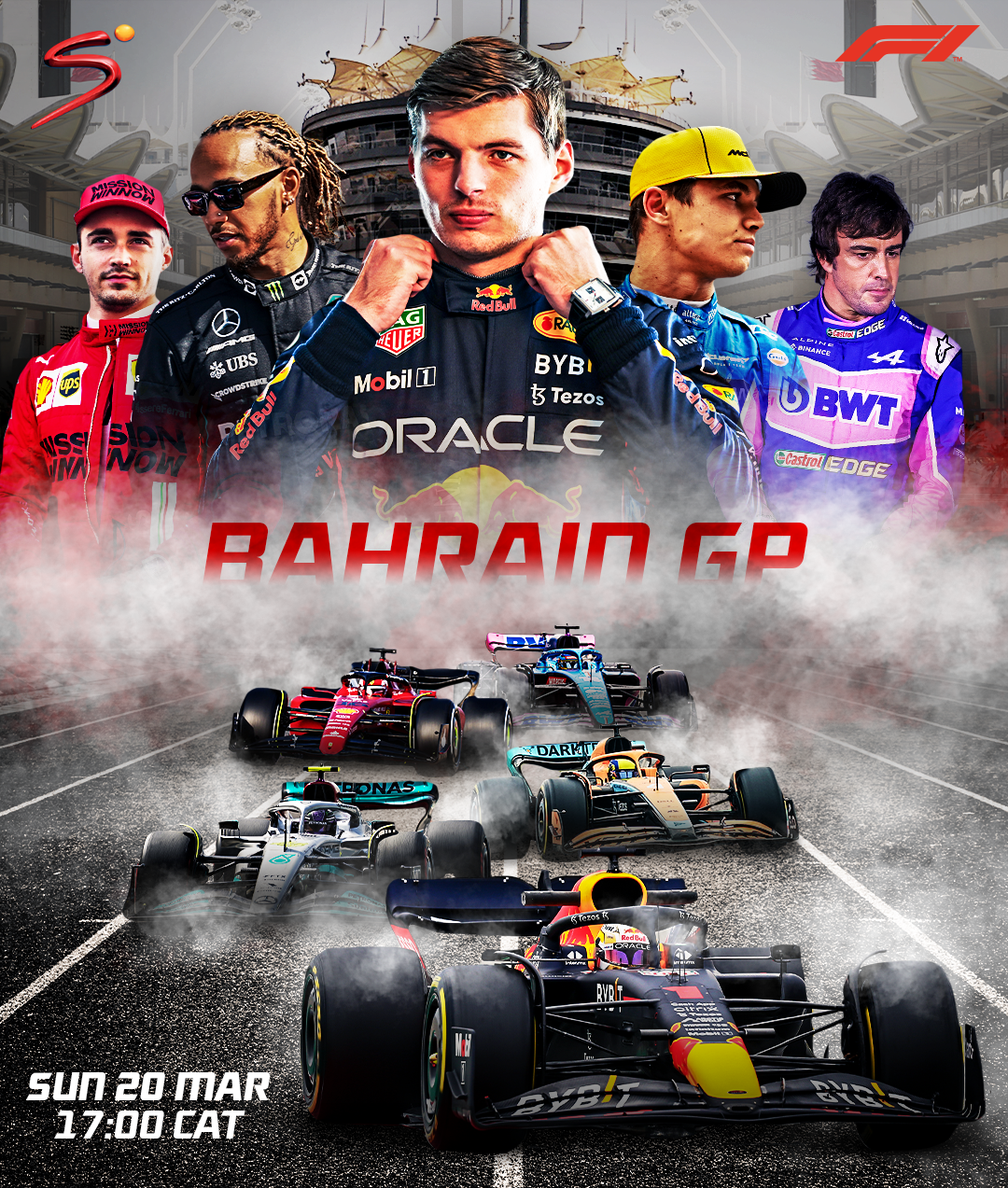
Round 1 of the new season promises to be a reveal-all in terms of how the teams truly stack up, and while the cars might not be nearly as spectacular as Anakin Skywalker’s pod racer, I’m pretty sure they’ll make for plenty of thrills as they start the battle for supremacy at the always-hot, always-bumpy Bahrain International Circuit.
Waldo van der Waal is a motoring journalist with nearly three decades of experience. He has worked as an F1 correspondent for various publications over the years, including WIEL and DRIVE magazines. He has traveled the globe to follow some of the greatest motorsport events on the planet, including many F1 races and Le Mans. He has been closely associated with the Dakar Rally for the last ten years, worked with Fernando Alonso during his attempt at the race, and remains in touch with the wonderful world of Formula 1.
BAHRAIN F1 GRAND PRIX – BROADCAST DETAILS
Friday, 18 March
FP1 | 1:30pm | SS Motorsport
FP2 | 4:45pm | SS Motorsport
Saturday, 19 March
FP3 | 1:45pm | SS Motorsport
Qualifying | 4:50pm | SS Motorsport
Sunday, 20 March
Race | 4:55pm | SS Motorsport
* Stream all the action on DStv *