

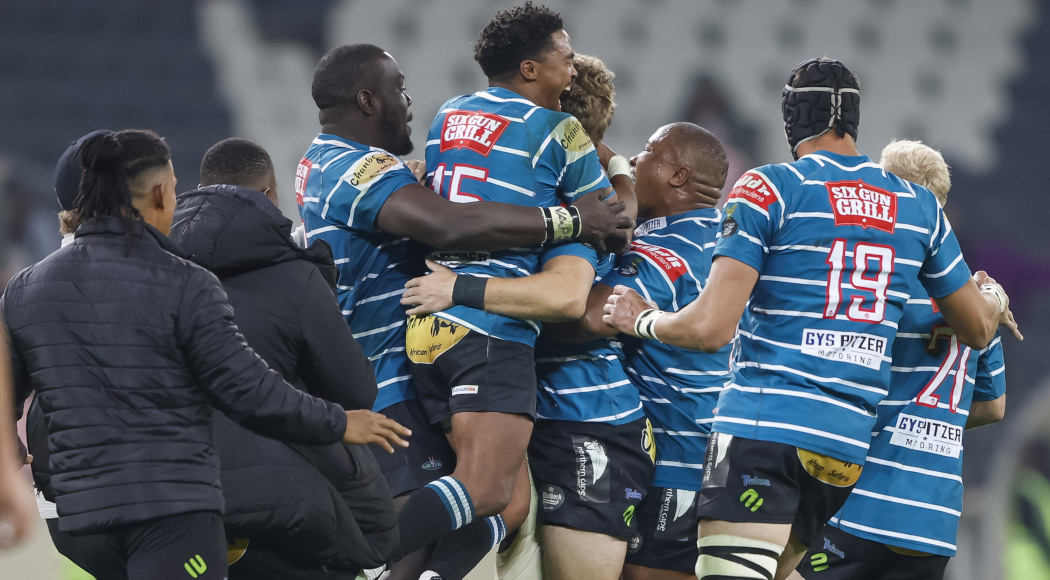
While the Carling Currie Cup gets ready to crown a brand new champion this weekend in Kimberley, and there was major rejoicing among fans of the Airlink Pumas and The Windhoek Draught Griquas, the future of the oldest domestic competition in the world is again in the spotlight.

There is no doubt a discussion needs to be had as to the relevance of the premier domestic competition, especially with increasing demand from the Vodacom United Rugby Championship and South African franchises’ entry into the Champions’ and Challenge Cup over the next year.
Because, while we all celebrate the achievements of two of the biggest parts of South African rugby that never really get the shine they deserve, their appearance in the final shouldn’t be seen as a catalyst for the watering down of the competition.
It was a clearly frustrated Gert Smal who said on Friday night perhaps the Currie Cup trophy should be put in a museum. After all, the Bulls were left with a very young side to face Griquas in a crunch game following their success in reaching the URC final.
And with squad limitations and salary caps that was hardly their fault as well. But it did put into perspective the fact the Bulls were the only URC franchise to try and win the domestic competition while the Cell C Sharks, DHL Western Province and Sigma Lions all treated it as a development competition.
In fact, the biggest shock of the weekend wasn’t a young Bulls team being beaten by a very good Griquas side at Loftus Versfeld, but rather that the Toyota Cheetahs were bundled out of the competition by the Pumas.
There has been much talk, and even a meeting at SA Rugby last week over the future of the Currie Cup, and where exactly it fits into a growing rugby calendar without losing the relevance and romanticism of the competition.
Certainly both the Pumas and Griquas added to that romanticism by reaching the final, and in the Pumas’ case in scoring a try a minute from the end of the game to shock the Cheetahs on Saturday.
Both definitely have claims on the trophy and their performance in upsetting some of the bigger teams in the competition underlines that good coaching and a solid talent structure can see players thrive in the right environments.
But the competition will not want to be seen as a feeder competition to the URC where it is watered down and only so-called smaller franchises take it seriously.
52 YEAR WAIT FOR A FINAL
Griquas, for instance, are thriving under young coach Pieter Bergh, who, after doing wonders with CUT last year in the Varsity Cup, has moved onto Kimberley where he spent several seasons as an assistant coach.
Bergh’s ability to get the best out of players that, to be honest, were rejected by several bigger rugby unions, not only shows a young coach who is thriving in an environment where money is not the biggest object, but also a bright future ahead for him when he hopefully gets picked up by a bigger franchise.
If anything Griquas this season have come back from the dead more than once and possess a fighting spirit that deserves to see them in the final.
Smal is correct in the fact that he said after the loss the Bulls were left in an untenable position and their young squad had little momentum or time on the field together. Critics of their play will argue they pushed too far to try and win both competitions in the same year where others saw the writing on the wall early.
But to the Bulls credit they did at least acknowledge the high esteem they hold the Currie Cup to be in, and with a possible third consecutive trophy to be won, who could blame them for that approach.
Their downfall was probably that they played their back-up Currie Cup squad too little together and left them with the impossible task to take on Griquas with a young team, which was never going to work.
Griquas on the other hand are a polished outfit, and played exceptionally well with the resources they have. Well-coached and tough as nails, few would begrudge them a first Currie Cup title in 52 years this weekend, and Bergh’s coaching credentials would soar.
BLOEMFONTEIN BLUES
The failure of the Cheetahs to make the final would be seen as a disaster in Bloemfontein, especially given the consistent complaining about being overseen for URC duty and the hard fight they put in to get a place in the European Challenge Cup next season.
But it also showed that a side that was built around two experienced campaigners - Frans Steyn and Ruan Pienaar - felt a lack of calmness and leadership in the final moments of their semifinal - especially with Steyn injured and Pienaar leaving the field early with an injury as well.
The fact the door was opened to the Pumas to storm back - and storm back they did, demolished the fairytale the Cheetahs fans had been waiting for, and for all the good work they did in the middle of the game to build up a two score lead, to see it disappear in the final moments will leave many questions unanswered for the coaching team.
On the contrary, the bravery that the Pumas fought with showed why so many of them will be snapped up by other franchises after the end of the Currie Cup.
Willie Engelbrecht’s rock solid play, coupled with the dynamic duo of Tinus de Beer and Eddie Fouche at 10 and 12 made it easy for the players on the outside - including the impressive Sebastian de Klerk to look exceptionally dangerous.
Their never-say-die attitude has made them a nightmare for opposition teams this season, as the Cheetahs found out to their peril on Saturday.
It wasn’t surprising to hear the tears of joy flowed in the Pumas’ changeroom afterwards after they reached their first ever Currie Cup final.
For the nearly man himself, Jimmy Stonehouse, who hard exterior demeanour and coaching abilities that have been ignored by bigger unions, finally he wasn’t the bridesmaid anymore in the larger coaching set-up.
DREAM FINAL
Where this leaves us now is a dream final in the most unlikely of venues in Kimberley and given there were almost 90 points in the last game between the two sides, an entertaining afternoon of rugby is on the cards which should be an exceptional advertisement for the game as well as the depth of talent in the country.
It will expose many new names to fans who don’t closely follow the action and be a tactical battle between two coaches who both have more than just a point to prove.
Both deserve to be in the final, and their presence will breath life into the argument that there is more to South African rugby than the four URC franchises.
And while the Cheetahs will take part in the European Challenge Cup next season, depending on where the Currie Cup ultimately features in a congested fixture calendar, why not the argument that its winner - outside the four URC franchises - deserves a spot in the Challenge Cup from next season onwards.
It would certainly add some spice to the domestic competition and however the URC franchises treat it, it would be worth playing for.
Even if two so-called smaller unions end up in the final again.
CURRIE CUP SEMIFINAL RESULTS
Vodacom Blue Bulls 19 The Windhoek Draught Griquas 30
Toyota Cheetahs 35 Airlink Pumas 38
Currie Cup final
The Windhoek Draught Griquas vs Airlink Pumas
Kimberley, 3pm Saturday
Live on SuperSport.