

So much has already been said about the romanticism of this weekend’s Carling Currie Cup final that the battle of the coaches has to follow suit.
After all, while so much focus has been on other competitions with bigger sides, the so-called smaller franchises have found a way to win, and a new Currie Cup champion will be crowned this weekend in Kimberley.
And while the home side The Windhoek Draught Griquas are looking for their first Currie Cup win in 52 years, the Airlink Pumas have never won the Currie Cup before and to be honest, never even been this close.
As both sides have history they want to make, so do the coaches. And the contrast between Griquas’ Pieter Bergh and the Pumas’ Jimmy Stonehouse.
The young rising star against the old warhorse. Both working for franchises that are expected to simply make up the numbers and be happy when they score an upset or two.
Both looking to claim the biggest victory of their careers.
The contrast between the two couldn’t be greater, and it poses an interesting sideshow for the final, as both would be worthy winners of the oldest domestic rugby trophy in world rugby.
BORN INTO RUGBY
It is hard to find someone who wasn’t born into rugby more than Pieter Bergh. The son of former Boland administrator and CEO Piet Bergh, he grew up in the shadow of rugby poles, and as the family stayed a stone’s throw away from Wellington stadium while his father was working there - Pieter and his brothers Olaf and Nicus had the stadium as their virtual playground.
Rugby was so part of their tapestry of their household that their mother Christelle washd the Boland team jerseys and often cooked food for the players. Rugby wasn’t just a passion, it was everything in the Bergh household.
As a player he represented Boland at Craven Week, and many of his weekends were spent as a ball boy at the Wellington stadium.
And it wasn’t a surprise that Bergh found his way into a love for the game and started literally at the bottom. When current Toyota Cheetahs coach Hawies Fourie was coaching Boland back then, he was looking for a video analyst - someone to spend hours pouring over footage and delivering it back to suit the team’s planning. The job paid an hourly fee and Bergh had to do it part time and drive every day to and from Stellenbosch, where he was involved and eventually coached koshuisrugby.
A lucky break came a few years later when Boland suddenly needed an assistant coach and Eugene Eloff, the then-Boland coach approached him to join the team. His value was quickly noticed and he was elevated to defence and backline coach within weeks.
It was soon apparent to those who worked with him that Bergh was a rising star, and he was approached by Griquas for his first stint there - starting out as team manager, video analyst and defence coach.
It was three long years alongside Peter Engeldow that Bergh toiled and learnt as he coached, slowly working his way up and catching the eye of some of the top brass in SA Rugby.
But when Engeldow left and Griquas appointed Brent Janse van Rensburg to the job, the new coach brought in his own staff, and Bergh was left jobless. As a new father with an infant daughter, being jobless wasn’t quite on the radar.
Luckily he was picked up quickly by the Central University of Technology (CUT) or Ixias and given the task of getting them a fighting chance in the Varsity Cup.
In what turned out to be the weirdest tournament played in a bubble, Bergh once again rose to the occasion and took them to their best season ever.
By this time Janse van Rensburg had left and Scott Mathie had taken over, and he decided to move on to a post in America, leaving CEO Arni van Rooyen an easy choice to bring Bergh back to Griquas.
And the results have spoken for themselves. Griquas have played some magnificent rugby over the season and shocked a number of big sides in the process, including Western Province and the Bulls.
Now Bergh stands on the precipice of his greatest achievement yet, and has underlined his credentials as one of the rising stars of South African rugby.
There were no shortcuts, just pure hard work and an ability to make players believe in what he wanted to achieve.
And if Griquas do pick up their first title in 52 years, his name will go down as a young legend alongside the likes of Mannetjies Roux and others who gave the Peacock Blues their greatest days on the rugby field.
WARHORSE JIMMY FINALLY GETS HIS BREAK
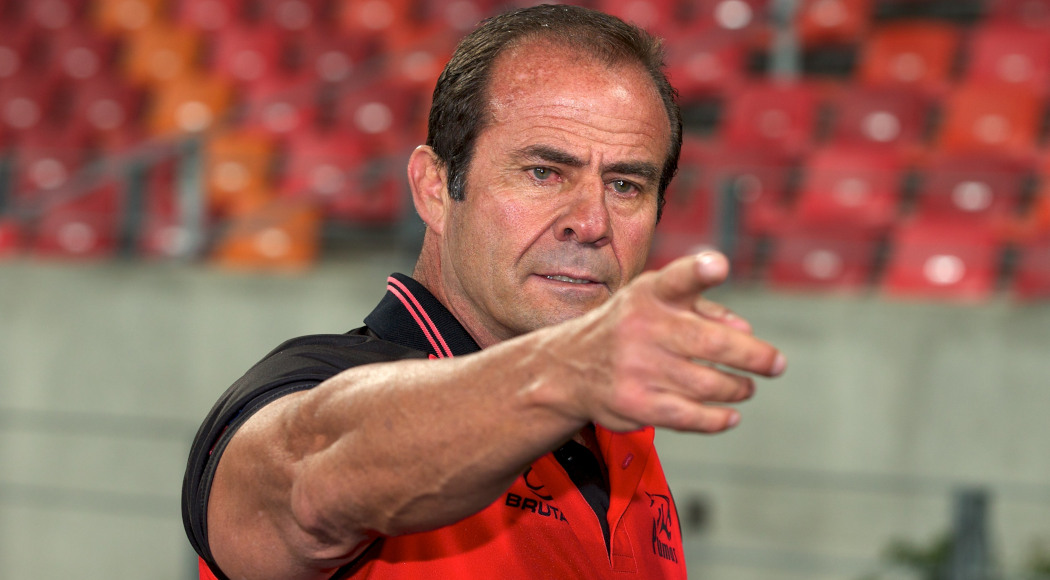
If there has ever been a coach that has been underrated and has deserved to get a bigger break, it is Jimmy Stonehouse.
The burly coach who once was the top bodybuilder in the country - he won the Mr South Africa competition in 2005 and came sixth in the Mr Universe competition - knows there are many perceptions about him and his coaching style. But despite all of this he continues to confound critics and produce match-winning teams that can take on any bigger union on any day.
That Stonehouse has not been given a chance to be elevated to a bigger team probably comes from run-ins that he has had with administrators, and his ability to speak his mind has sometimes counted against him.
But when it comes to work ethic, and a determination to succeed there are few others who can match him in this regard.
It wasn’t a surprise that he laughs at some of the perceptions about him and told a media conference recently after beating the Lions that he has to contend with perceptions that he is a “killer” coach.
"That's one of the biggest things I have to contend with at the moment. Everybody thinks I'm some sort of killer in this world when things don't quite go according to plan," Stonehouse told the media contingent at Ellis Park.
"But it's really not about that. I really just want each of my men to understand that there's life after rugby. You can only play this game for a limited time, so you have to give it your all today because maybe tomorrow you can't play it anymore.”
Stonehouse knows that there are players who don’t like his style of coaching, but he gets results. Hilton Lobberts famously told a rugby magazine he hated his time there at the Pumas, but Stonehouse knows how to get his team across the line.
Stonehouse also has a long rugby background, having played hooker for South Eastern Transvaal in his heyday.
He started coaching at Hoërskool Ermelo and found immediate success with the team, taking them to the quarterfinals and semifinals of the Director’s Trophy and became involved with the South Eastern Transvaal Craven Week team between 1990 and 1992, and again between 1994 and 1997.
He was snapped up by Hoërskool Waterkloof, and took them to their first Bulls championship in 2003 in a domain where Affies and Pretoria Boys’ High normally dominated. He then coached the Blue Bulls Craven Week team in 2003 and 2004.
Along the way he also found time to coach the Russian under-19 and Sevens teams before a stint at Pretoria Harlequins where he took the club to the semifinals for the first time in 22 years.
He was appointed for the first time in 2008 at the Pumas, the professional version of South Eastern Transvaal after the amateur name was dropped. An unbeaten run in 2013 in the First Division saw the Pumas get promoted to the Premier Division and Stonehouse snapped up the SA Coach of the year award in the process.
In 2015 Stonehouse coached the Japanese side, the Toyota Brave Lupus before returning to South Africa and rejoining the Pumas, where they have continued to put up brave performances against bigger teams with bigger budgets.
They came close last year and just missed out on the semifinals, but made sure this season with some exceptional fighting spirit to make the final with two last gasp wins over the Cheetahs - heart-stopping stuff that saw Stonehouse break into tears after the semifinal.
Stonehouse has battled and been disappointed, but he has soldiered on. And finally with the Pumas making the final for the first time in their history, he is on the brink of getting the reward for all the hard work and toil.
And who would begrudge him a chance to drink out of the golden trophy.