

LOSING TWO IN A ROW CHANGES PERCEPTION BUT THREE CAN MEAN CRISIS
Across both the Guinness Six Nations and the Vodacom URC we’ve reached a point where there is symmetry when it comes to the pressure faced by teams that just a short while ago were seen to be riding the crest of a wave.

The most obvious example is England and the DHL Stormers. England had won 12 in a row before they lost to Scotland in the Calcutta Cup clash in Edinburgh and they were being regarded as the biggest threat to France for supremacy in the Six Nations and a growing threat to South Africa’s global domination.
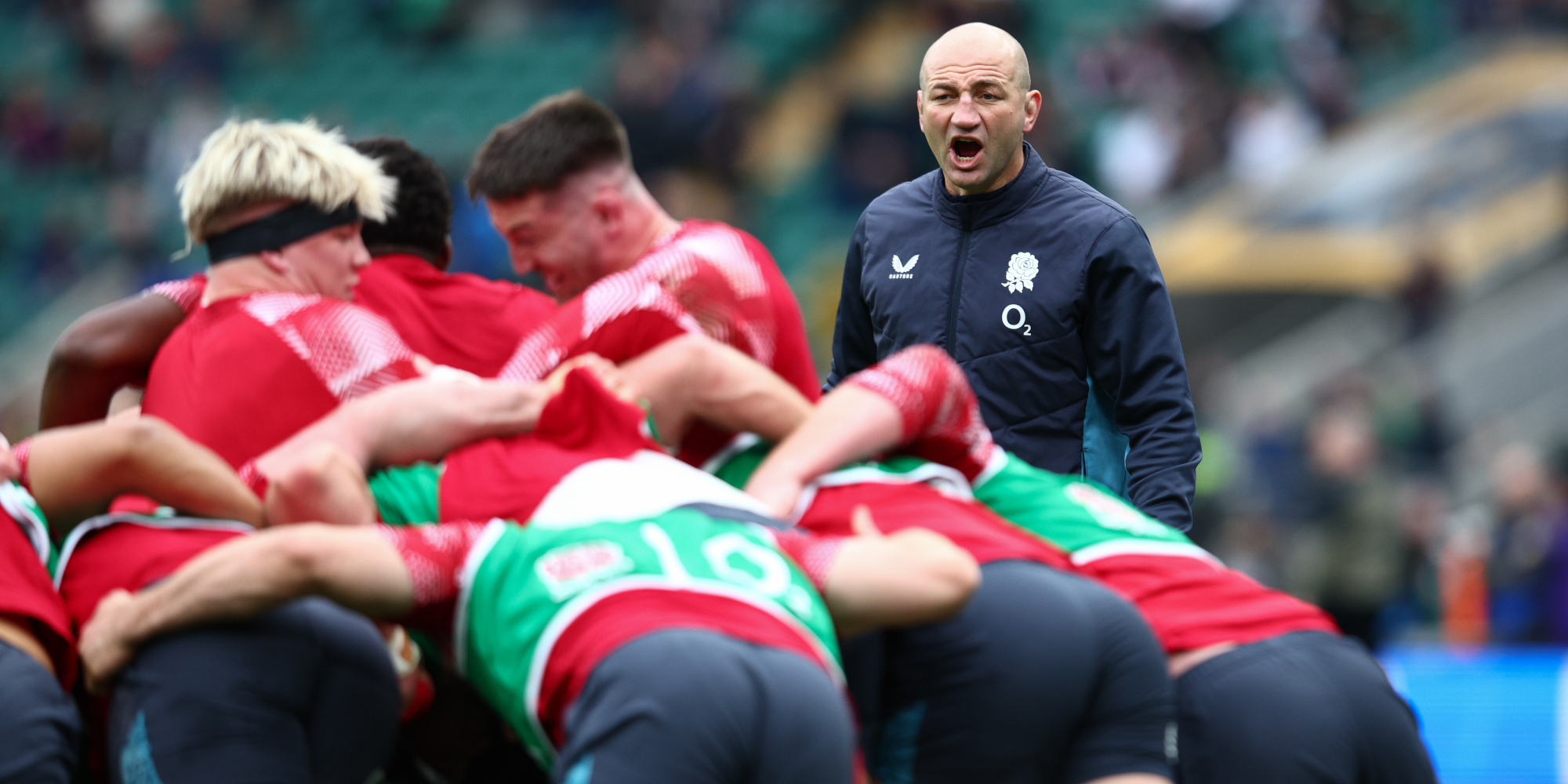
The loss to Scotland was a wake-up call for England, but because there had been 12 positive results preceding it, it was seen as an aberration. That’s no longer the case after the decimation at the hands of Ireland, with much extra gravitas added to the post-Twickenham washup.
The praise that had been heaped on coach Steve Borthwick and certain players over many months was forgotten after Ireland ransacked their home and it is not just the odd loan voice now that is wondering if, should England trip up in their next game against Italy in Rome, Borthwick’s position as England coach might be under threat.
John Dobson has enough credit in the bank as Stormers coach for his position not to be questioned, but his team is in a similar position to England as they head into Saturday’s 11th round URC fixture against the Lions in Johannesburg. The loss to the Sharks in Cape Town on 24 January was the Stormers’ first loss in the URC after eight games. Like England against Scotland, that was seen by some of us as an aberration.
When the Durban game a week later delivered the same result, it became a bit more serious. Now comes a chance for the Stormers, who are still in a comfortable position on the log, to set the record straight. As the captain on the day, Sacha Feinberg-Mngomezulu, told the Supersport interviewers after the loss in Durban, “If we were offered our current log position and record at the start of the season, we would have taken it”.
But a third successive loss, particularly with the Bulls in Pretoria next up a fortnight later, would represent a much more dramatic swing away from the previous narrative. Not that the Stormers are the only local URC team under pressure this week. Having just announced JP Pietersen as permanent head coach, much of the good work done by the Sharks in their two statement wins against the Stormers will be undone if they follow up defeat in Johannesburg last weekend with one in Pretoria.
Then their next game, which is against Munster in Durban, will become super important to the Sharks if they want to sustain any semblance of a turn-around narrative.
SO MUCH FOR THE URC BEING WEAK
One of the reasons it was impossible to keep the Cheshire Cat smile off my face when Ireland were taking England apart at Twickenham last week was because of a narrative that was bubbling under after the first round of the Guinness Six Nations - that it showed that the Vodacom URC was a weak competition.
This argument was peddled due to France, who have arguably the best domestic competition, the Top 14, thrashing Ireland on the opening night of the competition and England, who have the Premiership as their competition, thumping Wales.
Well, guess what - a week later there was a seismic shift, not that it was noted by those who’d made the initial argument that the opening round results showed up the URC. Italy confirmed their improvement by pushing Ireland all the way in Dublin, while England were outplayed by Scotland, another URC nation, in Edinburgh.
And then on to this last weekend were swept away by Ireland on their home ground. Italy were also competitive for a while against France before capitulating in the final minutes.
EDDIE IS RIGHT
Eddie Jones was on the money when he said that England’s humiliating failure to back up the pre-tournament hype in the Six Nations is down to their head coach Borthwick getting ahead of himself. It will be recalled that two weeks before kick-off, Borthwick spoke about the final game of the competition against France in Paris as a possible decider for a Grand Slam quest for both teams.
Context is everything, and what Borthwick may have been meaning was that he was hoping his team would be in that position come the final game on 14 March, but he still shouldn’t have been looking that far ahead.
One of the most boring cliche quotes in rugby, indeed in any sport, is the one where a player or coach says “We are just focusing on the next game”. But it is necessary, particularly from a coach who might risk diverting his players’ attention from the immediate task at hand when he starts talking too much about the pot at the end of the rainbow.
I wrote it here before the Six Nations started, the way the English media built up England reminded me a bit too much of how their cricket media built up England ahead of the recent Ashes series in Australia. And we know what happened there. It seems from where I am sitting that hyping up their teams is part of the English DNA and that then dealing with the disappointment is a national trend.
JGP MAKES SEXTON’S RETIREMENT LESS RELEVANT
What should have been disappointing from the England rugby supporter’s perspective was how good they made Ireland look. An Ireland that is supposedly in decline but looked anything but that when they won 42-21 at Twickenham.
Again, let’s reference the Ashes - the disappointment at the Ashes loss for English fans was built around a perception that Australia aren’t currently as strong as they used to be.
One of the best quotes I read in the UK media after the Ireland win came from David Walsh of The Times, who had been one of those who’d written about Ireland’s decline after their big defeat to France and mediocre performance against Italy: “Be aware of the sting of the dying bee”.
That said, you do have to give credit to Ireland coach Andy Farrell for his successful changes in selection. Wing Rob Baloucone looks a world beater, and it is hard to fathom how centre Stuart McCloskey has only played 29 test matches across an international career that now spans 10 years. The Irish attacking shape was also extremely impressive.
But for me, seeing there has been so much written about the quest to replace Johnny Sexton as the Ireland match-winner, you can’t look further than scrumhalf Jamison Gibson-Park when looking for a reason that rumours of an Irish decline might indeed have been premature.
The flyhalf is often referred to as the team’s general, but sometimes it is the scrumhalf, as was the case for the Springboks when they won the World Cup in France in 2007. Butch James was the SA flyhalf in that tournament but it was around Fourie du Preez that everything happened.
Bryan Habana scored the tries that made him the man of the tournament but to me it was Du Preez who was by far and away the Boks’ MVP.
And ditto JGP when it comes to Ireland. As long as he is there, and the Irish play with the sort of passion and commitment they took to Twickenham, Ireland will still be capable of beating anyone on their day.
JP’S FIRST GAME NIGHTMARE DOWN TO SHARKS’ CONTRACTING
After their two good wins over the Stormers you’d have expected the Sharks to follow up with a win over the Lions, but there was no surprise in last weekend’s result.
Once it was learned that the Durbanites were heading to Ellis Park with an understrength team, the Lions, who are a much better team than their big defeat to the Bulls indicated, became the overwhelming favourites.
It was clear that the Sharks were saving their big guns for Saturday’s derby against the Bulls at Loftus, and I wrote in my preview that if I was Lions coach Cash van Rooyen I’d lead off my team talk by telling my players it is clear the Sharks don’t respect them like they do the Stormers and Bulls.
There has to be a reason why the Sharks have lost all four of the URC games they’ve played against the Lions over the past two seasons, whereas in their derbies against the Stormers and Bulls over that same period the synopsis reads played seven and lost just one, and that defeat a last gasp loss to the Stormers in Cape Town last January.
If you look back at the Sharks team selections over that period you will probably note that they are almost always at full strength when they play the Stormers or Bulls. It is invariably against the Lions that isn’t the case if we are referencing derby matches.
And yet Pietersen shouldn’t be blamed for his selection, for he had little choice. This is the time of the year where Bok resting protocols have to be adhered to, when it makes most sense, and as Stormers assistant coach Dawie Snyman said during the week, you’d want your Boks to be fully available once the run to the business end of the URC starts in the second half of March.
Snyman works for a franchise where, because there aren’t as many current Boks, there’s less of a noticeable difference between the team with Boks and the team without Boks. The Stormers’ contracting, like the Bulls’ was in the Jake White era, has been astute, whereas the Sharks’ has been too lopsided towards securing marquee players.
He’s been in the Sharks' system for a while now so Pietersen would have been more aware of it than his predecessor, John Plumtree, was when he returned to Durban three years ago. When Plumtree last coached the Sharks in 2013 it was the Super Rugby era, when there was never a clash between franchise/club and international rugby. Your top players were always available.
That’s not the case anymore. The Sharks have pretty much been struggling to establish the continuity necessary to be consistently successful ever since Plumtree’s predecessor Sean Everitt had the rug pulled out from under him by the marquee contracting that forced him to abandon the route he was on with a team built around players he’d worked with at age-group level. Everitt’s team topped the Super Rugby log when Covid hit in 2020.
WORLD RUGBY WORKSHOP HAS TO DELIVER A GLOBAL SEASON
I have made out that the Sharks’ contracting system is wrong, which it is in the current circumstances. But it shouldn’t be. You do need international quality players to challenge for the biggest prize in club rugby, which is the Champions Cup. Bordeaux Begles, Toulouse and Leinster are loaded with international players and you need to have like for like if you want to beat them.
The Sharks’ contracting system as it was (they are working on changing their model) was only wrong because of the ridiculous situation SA rugby finds itself in where it is committed to a 12 month season due to the Boks being committed to the southern hemisphere international season while the clubs are committed to the northern season.
The SARU president Mark Alexander has called on all role players to pitch up with an open mind to a World Rugby Workshop that will be held in London shortly at which the concept of a global season will be discussed. It is in SA’s interests in particular, and also Argentina’s (most of their players play their club rugby in the northern hemisphere), that an agreement is reached on a global season, but also world rugby as a whole.
For instance if New Zealand and Australia want this country to remain committed long term to the southern hemisphere Rugby Championship, it may be necessary for the competition to coincide with the window that the Six Nations is played in. A global season will make that more possible.
LIONS WOULD BE POPULAR SHIELD WINNERS
A few seasons back John Dobson, who had won two successive SA URC Shields at that point, commented that it would “feel a little flat” if his team won it again. That was after being told that, because only derbies counted towards the Shield, his team could still sneak in ahead of the Bulls to claim the trophy.
Dobson rightly said it would feel flat as the Bulls were well in front of the Stormers on the overall log. It doesn’t make any sense to me that the Shield gets awarded only for derby results - the best SA team is the one that finishes highest on the log. Which at the moment would have been the Stormers, just like two years ago it should have been the Bulls (they did eventually win it).
But those misgivings about the Shield aside, and also I do wonder if any of the other countries take it seriously, there is a part of me that would love to see the Lions win it this year.
Their big defeat to the Bulls aside, there appears to be something good happening at last at the Johannesburg franchise, and it is underlined by the fact that they are now acquiring players instead of losing them (Boan Venter springs to mind), and players are also committing long term, such as fullback Quan Horn, who had offers from elsewhere he could have taken up.
I’m not a big fan of the Currie Cup being played in the off-season and have criticised the Lions for taking it too seriously but they’ve also lost two successive emotional domestic finals off the final move of the game. Their win over the Sharks last week put them within a point of the lead on the Shield log and as I suspect a win might mean more to them than others it wouldn’t disappoint me to see them lift the local trophy.