

The Springboks learned enough through the aggressive rotation policy they’ve followed over the two seasons since their Rugby World Cup triumph in France for it to alleviate any need to be too radical in the spreading of the selection net this year.
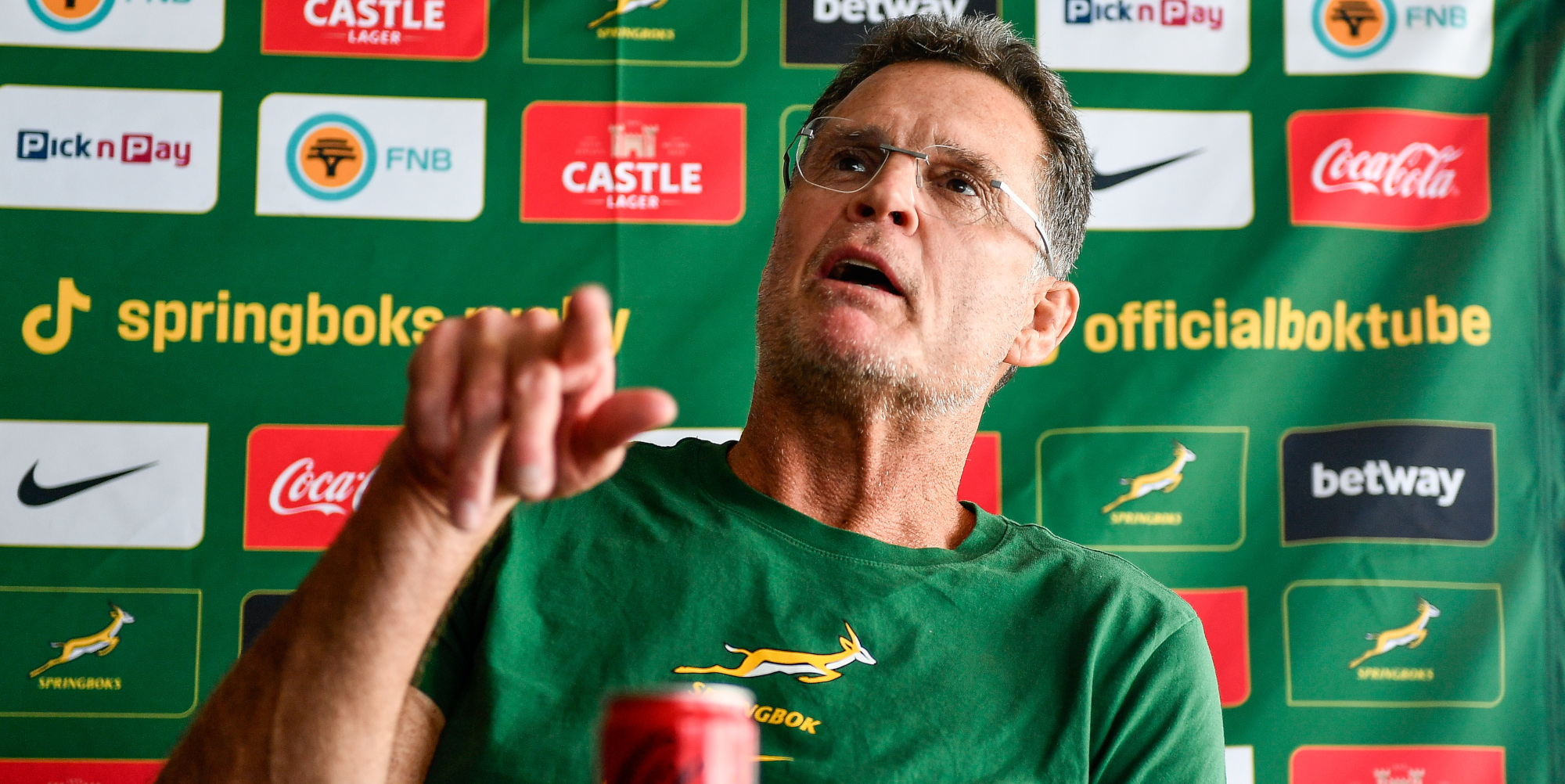
Speaking on the eve of the first national alignment camp of 2026, which starts in Cape Town on Tuesday, Erasmus said in a media conference at the SARU headquarters in Plattekloof that while it was necessary to establish your top five or six players in each position, the hard work of creating depth had gone well enough for there not to be a need to put numbers and goals in place heading into what will be a highly competitive rugby year.
Last year, the British and Irish Lions tour of Australia was happening at the same time as the July internationals in the rest of the southern hemisphere, meaning it was a less intense start to the year for the Boks as they built themselves into the international season with a non-international game against the Barbarians, two tests against Italy and one against Georgia.
AVERAGE OF NINE CHANGES A GAME LAST YEAR
Erasmus was able to experiment with his selections in those games and it contributed to the Boks ending the 2025 international season having made an average of nine changes for every game. However, after another warm-up game against the Barbarians, this time in Gqeberha towards the end of June, this season the Boks go straight into the new Nations Championship.
They kick off the competition, which is effectively the respective southern and northern hemisphere nations squaring up to each other like they normally do in July and November of every year, only now for log points, with the competition culminating with a finals weekend in London, against England in Johannesburg in the first weekend of July.
They then go on to play against Wales and Scotland in Pretoria and Durban, with the remaining fixtures against France, Ireland and Italy coming on the end of year tour to the northern hemisphere.
𝐁𝐑𝐄𝐀𝐊𝐈𝐍𝐆: Rassie Erasmus has announced a squad of 49 players that have been invited to the first in-person Springbok alignment camp of the year in Cape Town 🇿🇦🚨 pic.twitter.com/yBhF3hzR9y
— SuperSport Rugby (@SSRugby) February 25, 2026
“I think we’ve always said that 18 months out from a World Cup, you should know who is likely to make it to the next year’s World Cup and who isn’t,” said Erasmus.
“We certainly know a lot more now than we did 24 months ago, or 12 months ago. So for us, knowing that we are playing top, top teams this year, not that I am saying Italy aren’t a top team because everyone knows I really rate Italy; I don’t think we can tie ourselves to specific numbers when it comes to rotation.
“You might look at the schedule now and try and figure out when can we do it? Meaning, when can we rotate, when can we experiment? And you might say, well then the next two games after England aren’t quite as tough as the one against England, so maybe we can do it then. But we are still playing top teams then, so if we trip up there, then it might impact on how we go for the rest of the year. We will know we’ve made a mistake.
“I was given the stat earlier. Nine is the number of changes we averaged last year. But we don’t need to do that this year because by doing it last year, we released the pressure on ourselves to do that again this year. We have looked at so many players, so many players have now been given international experience.
“We’ve learned some lessons, we’ve trialled some guys and we know more or less who can do it and who can’t do it. But the big thing, what we are trying to work on really hard behind the scenes, with both the help of SA Rugby and the franchises, is to make sure we have six players in each position that can play international rugby if we need him to do so.
“You never know what might happen. Look what happened to New Zealand at their own World Cup in 2011. They had several good flyhalves, but they all got injured, and in the end they had to call up Stephen Donald from a fishing trip for the final against France, and he ended up being a hero for kicking an important kick.”
NEED TO BE CLEAR IN SUCCESSION PLANNING
Indeed, Erasmus shouldn’t really need to use the Kiwi experience as an example, as he himself faced a scenario before the last World Cup where players who had been assumed to be key components in the challenge in France, because they had been part of the win in Japan four years earlier, were all injured in the buildup to the tournament. When the squad was announced, it was the absence of Handre Pollard, Lukhanyo Am and Lood de Jager that grabbed the headlines.
“Donald was the fourth choice flyhalf, and he flew in and kicked that kick, and not just in any game, but in the World Cup final. So we need to be five or six deep in every position, we need to know what we have there and be clear on our succession planning. Then we will have the numbers in place hopefully when the World Cup year arrives,” he added.
SELECTION APPROACH WILL BE FLEXIBLE
Erasmus said that the amount of changes made, and the rotation, will depend on how the Boks go in each game.
“We always say to the guys that if they go well in the game that is coming up, then we are in a more comfortable position (to try things) and that won’t change. It is why I am not putting a number on how many guys I want to see play for the Boks during the course of this year. It might be 33, it might be 57. It all depends on what is needed and how the season goes.”
After the first three Nations Cup games the Boks will head to Buenos Aires to face Argentina, a game that will fall roughly halfway through the five-week gap between the July games and the start of the four-match test series against the All Blacks, ‘The Greatest Rivalry Series’.
They will conclude the series in Baltimore in the United States, and fly from there to Perth, where they will face Australia in another friendly, but with the trip having the dual purpose of giving the Boks a taste of one of their bases for the 2027 Rugby World Cup.