

Every nation goes to the Rugby World Cup with a certain objective in mind. The top teams are out to win it, the others see it as a win just to get out of the group phase. Others just want to win one game. Others look for the win over a rated opponent that will define their tournament.

Samoa came within a cusp of doing that in their final match at France 2023. They went down by one point to England and that this was in effect a game they were treating as a kind of final was illustrated with the way they reacted after the hooter ended it. The disappointment was obvious, some players lay prone on the ground refusing to move. It was as if they’d lost a play-off game.
And it was a mood that they carried with them post-match in the media interviews, with their captain Michael Ala’alatoa talking about how hard the defeat was to take. It wouldn’t have made any difference to the pool standings, it wouldn’t have got the Samoans out of their group and into the quarterfinal, but you have to see it from the Samoan perspective: A positive result against England would have made the statement that made all the pre-tournament hard work worthwhile.
SAMOANS FELT THEY HAD REASON TO FEEL AGGRIEVED
Although those with a tier one nation perspective might agree that the Samoans actually got away with a bit when it came to dangerous tackles, which is something you almost accept when they play as they are often quite borderline with their hits, they felt they had good reason to feel aggrieved with the officiating. And their coach Seilala Mausua wasn’t shy to say as much afterwards.
“I ask the question if the referees have an unconscious bias when a Tier One team plays a Tier Two team… I believe there is and I believe there has been in the past,” said the coach after a game where his team conceded 14 penalties and had two tries disallowed.
“I don’t think it's anyone’s fault; it’s what I’ve seen in our game for the last however many games, since I was playing.”
Mausua is right that this wasn’t the first time Samoa felt aggrieved about the refereeing at a World Cup, and we can go back to a bruising 2011 match involving the Springboks at Albany as a reminder. The Boks, reigning World Cup champs in that tournament, won 13-5, but Welsh referee Nigel Owens sent off Paul Williams and the Samoan complaints were later justified when Williams went in front of a Disciplinary Committee that decided against imposing a ban. ?They reprimanded Williams for striking a South African player but he escaped a ban on the grounds that his actions were not heavy, had no adverse effect on the game, and that there were “compelling on-field and/or off-field aggravating features.”
BOKS HAD REASON TO COMPLAIN IN 2011 TOO
From my memory of that game, the Boks had plenty of reason to complain in that game too, with the Samoans going in high and dangerously with alarming frequency. At least one influential Bok, centre Frans Steyn, was made to pay for the physicality of that game by being ruled out of the quarterfinal against Australia that followed.
But the situation, mood and complaints back then do speak to the latest Samoan complaints. Indeed, the Wales coach Warren Gatland said before the start of that tournament that he was glad not to be facing South Africa in the final group match because referees, as well as teams, had their minds on making the quarterfinals and tended to subconsciously favour the bigger teams.
Owens was the best referee on the planet at the time, but he’d probably admit now that his wasn’t a perfect performance that night - to either team.
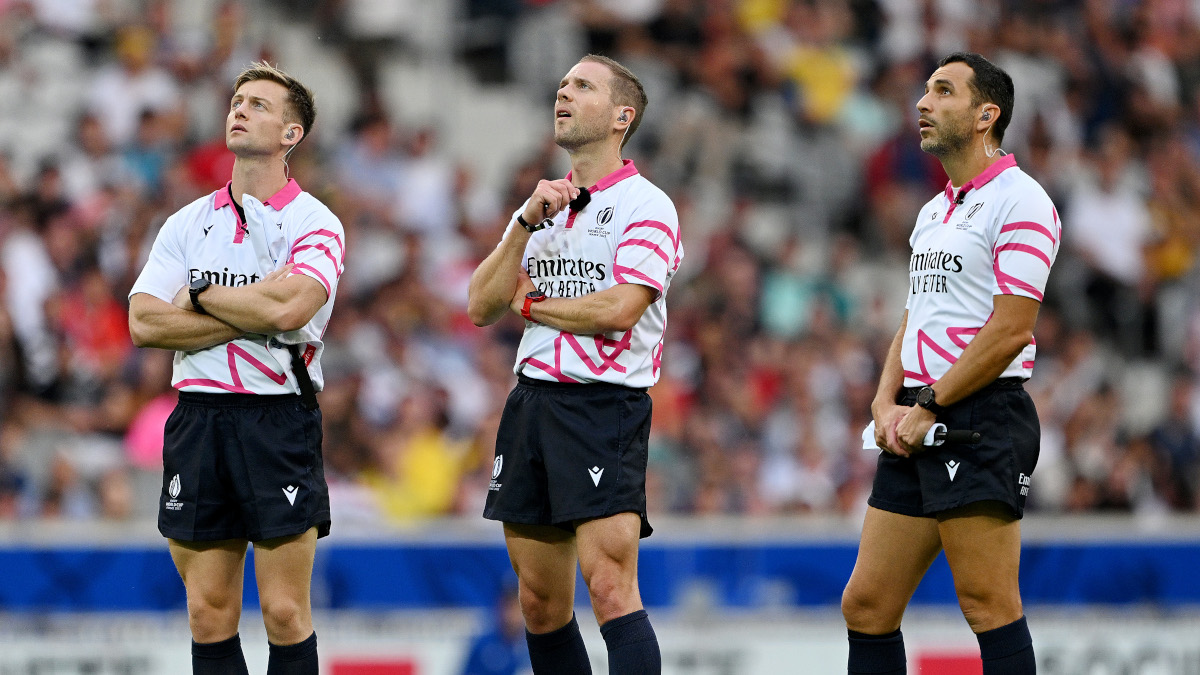
A lot of that is subjective and open to debate though, what isn’t debatable in my view is that the call that really cost Samoa against England shouldn’t have been allowed to happen and is part of a tendency that is blighting the sport - namely the way TMOs feel they have to look through everything building up with a fine tooth comb.
The second try that was disallowed was only reversed after Samoan flyhalf Lima Sopoaga had attempted the conversion. It was disallowed because, in the view of the TMO, Tumua Manu had knocked on in trying to catch the ball on the bounce. If he did knock it on it was a very marginal 50/50 type call and certainly not clear and obvious. Even the onfield referee didn’t seem entirely convinced.
And while the laws and applications of the laws seem to change on a monthly basis, so forgive me if being pedantic and messing the game is the new focus and rage, surely it is the clear and obvious howler that the TMO was introduced to officiate on? Going through every try scoring move with a fine tooth comb to the extent that you hold up play two minutes later because you finally spotted something that might make the TMO’s ego feel good was surely not what the TMO was introduced for.
TMO INTERFERENCE DETRACTS FROM SPORT’S SPONTANEITY
There’s already a problem with crowd spontaneity caused by too many electronic checks and balances, and it is not just in rugby, where the many stoppages are really trying for the patience of spectators and undermining the spectacle and fluidity of the sport. Ironically the big controversy in the round ball game last week was the mistake made by a VAR who made the wrong call in the Liverpool/Spurs game because he thought a perfectly good Liverpool goal had been disallowed onfield. He only realised the mistake after he’d allowed play to go on and then, against all common sense, stuck to the letter of the law that doesn’t allow a change after play has restarted.?That was different though to the rugby TMO interference - the Liverpool player was clearly onside, it wasn’t a marginal call, it was clear and obvious, and it was an instance in sport where common sense should have prevailed.
LOOKING FOR A TOE BEING OFFSIDE ISN’T WHAT FANS BUY INTO
There is no conversation between referees and VAR in that sport as the refs aren’t miked up, and it has prompted many soccer fans to point to rugby’s example as the way forward.
But soccer fans also complain about how the VAR is ruling against goals because “someone’s toe was offside”, to quote one commenter in a London newspaper last week, and that really shouldn’t be the case.
Samoa’s gripes are particular to the islanders and developing nations, and are not new. The "subconscious bias" may be explained by another problem faced by the developing rugby nations, which is that they don’t play against top teams regularly therefore don’t get regular exposure to top referees and therefore the current trends.
But if rugby is to learn something that could be good globally out of the unhappiness felt by the narrow losers in the England/Samoa game perhaps it is that if it takes two minutes or more to decide there was an error, that should surely mean that the error wasn’t clear and obvious enough to overrule the onfield decision and stop play for.
There have been some great moments at the World Cup but the trend in the sport of games being stretched to beyond 100 minutes because of all the stoppages is not doing rugby any good. Knowing a try can be disallowed after play has restarted after the conversion also saps the necessary spontaneity of celebration that makes watching and playing sport so exhilarating.