

Two killers meet, one must die.
That’s how Emirates Lions coach Julian Redelinghuys described Saturday’s Vodacom United Rugby Championship showdown with the DHL Stormers in the setpiece.
The Lions are desperately looking to repeat their December derby win in Cape Town to keep themselves in with a chance in the URC, while the Stormers can complete an unbeaten run in local away derbies if they win the game. Unbeaten with an asterix, because of the drawn game in Durban against the Cell C Sharks.
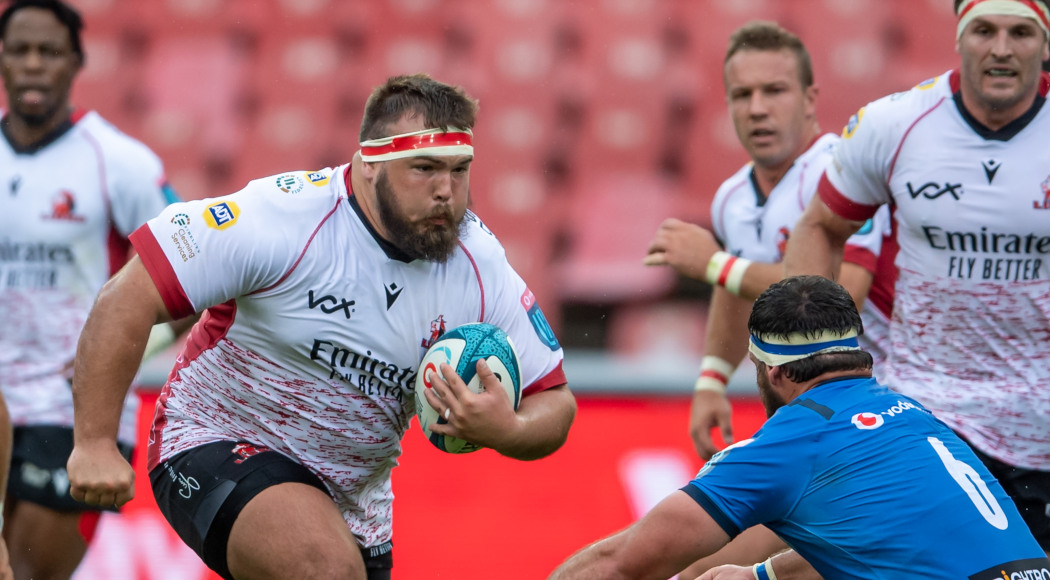
While Carlu Sadie has won the most penalties in local games in the URC thus far, there have been some questions about his technique, and some opposition coaches have felt he has gotten away with more than he should.
Still, meeting World Cup winner Steven Kitshoff this weekend will be a good challenge for the Lions prop, especially as the Bok selectors will be keeping a keen eye on his play.
The Stormers pack are highly rated and for good measure, and held their own against the impressive Bok-laden Sharks pack in the last fortnight. While the Lions may need more inspiration in other areas on the field, the setpiece is not one of them.
“They are a good pack, they had a good battle against the Sharks the last two weekends. Every South African team prides themselves on their scrum and we know its coming. That is what we want, and that is what we look for,” Redelinghuys said.
“I don’t know if everyone is on the same page as me but those battles will test you to the max. Two killers meet, one must die. That’s how South African rugby gets stronger. I’m looking forward to it.”
While the never-ending debate on the scrum continues, Redelinghuys pointed to new initiatives from new URC Reffing boss Tappe Henning to help referees with the interpretations. While having sympathy for the refs in this regard, Redelinghuys said all the teams could do is “paint good pictures” for the referees and hope for the best.
“The refs have a tough job to ref the scrum. Most of the time there are so many things that refs have to look for. What we’ve done is to learn what cues refs look for and give them good pictures in this regard and good pictures that work for our system.
"It is tough, it isn’t an easy job for them, especially if you think of binding, guys slipping, knees on the floor and guys slipping. I do have a lot of sympathy for them and currently they are using the assistant refs to help them. They are a team of three to look for specific things they cannot see. It is a tough job and we try and give good pictures of stability and control.
“Hopefully if you dominate a lot of scrums in a row and you would hope to get favourable calls.”
While there is a distinct difference between the way URC games are reffed overseas in comparison to local referees, the merging of hemispheres should bring the interpretations closer over time.
“When we were overseas it was different. In South Africa all teams pride themselves on their setpiece all the time, whereas overseas a lot of teams just try to get the ball in and out, so refs don’t normally have that type of decisions to make. Tappe Henning has taken over as referee, and I like the way they are doing it, we are sending clips and we are trying to get solutions. They are trying to serve the game and we don’t want 100 resets in a game.
“We want the right call to be made most of the time. There are good processes in place, but we need to see those processes deliver results, and that will come.
“Tappe has a lot of northern hemisphere experience but with Tappe there, and the more we merge, the more we talk, the closer we will get. It will take some time like everything in life. It is a process and it needs to take time, where the refereeing will be consistent.
"We always had Southern Hemisphere guys refereeing Southern Hemisphere players and now we have to merge. So the more we get used to that, the more we rub shoulders with each other, the more aligned we will get.”