

“We went to the rugby at Kings Park and the Sharks lost but we had a jolly good time.”
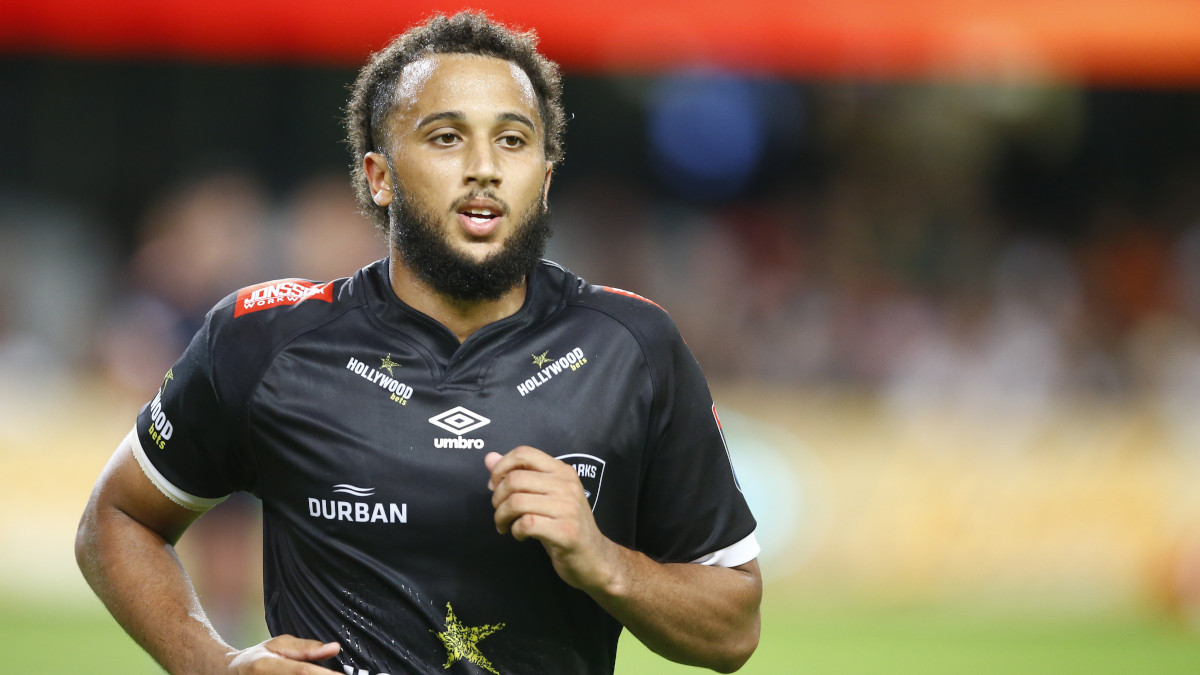
There might have been a lot of people who went to the Hollywoodbets Sharks’ home ground to see them play the DHL Stormers who might have spoken those words, or echoed something similar. When the Sharks were being dominated by their Cape counterparts at a point of the first half, the Mexican Wave was rolling around the stadium.

Times are changing, and it might have been my imagination, but the defeat in the Vodacom United Rugby Championship derby didn’t get greeted afterwards in the funereal mood that some Sharks defeats have been when I’ve been to the stadium.
The atmosphere almost reminded me of my primary school days back in the 1970s when what was then the Natal team was supported as much for aesthetic appeal as their ability to challenge and beat the top teams.
RELEGATION MEANT HUMOUR DRIED UP
From 1979, the year I happened to start at high school, it started to become a bit more serious as the Natal team became relegation threatened. Sure enough in 1981 they were plunged into the B Section of the Currie Cup. That was a dark day indeed, and the humour ran dry.
No-one wanted the team to be playing in the lower tier, and it was a bit like what is depicted in the documentary ‘Sunderland until I die’, about the English soccer club that just happened to plunge from the Premier League to the Championship and then to League One in the period the filming was being done. Okay, maybe the Natal team wasn’t mentioned in church services like Sunderland were in their city, but you know what I mean.
Most of those B Section league games were fun because Natal tended to win well, at least at home. Sizeable crowds turned up. But then would come the promotion-relegation game at the end of each season and the mood would change. There was just so much riding on the game. The first time it happened was October 1982, a year after the then Banana Boys had lost their A Section status in an unexpectedly one-sided defeat to Eastern Transvaal, the old Red Devils, at Pam Brink Stadium in Springs.
What isn’t often pointed out is that the Natal team that dropped out of the top echelon was very depleted when it happened. Wynand Claassen, the Springbok leader earlier that year in the controversial and eventful 1981 tour of New Zealand and the late Gawie Visagie were both unavailable, and there were so many injuries that the veteran Australian flanker Dick Cocks, who hadn’t played for Natal for three years, led the team.
A few seasons later, in 1984, it was a similar story when flyhalf Pete Smith was recalled from nowhere for a promotion game against Northern Free State in Welkom. The opposition was known to Natal fans as the Purple People Eaters because they were christened as such by Cocks, who by then was a newspaper columnist.
The Natal team bombed that day to condemn themselves to another year in the B Section, just as they did in the aforementioned 1982 Kings Park promotion game against the team that had relegated them 12 months earlier, those damned Red Devils. What I remember very vividly about how much that 1982 game meant to Natal rugby though was a newspaper cartoon, probably drawn up by the legendary Jock Leyden, that showed the skipper, Claassen, waving to the stands for the spectators to join in and help the team. Leyden, if it was him, was spot on with that comment on what it meant to Natal.
Those were dark days indeed and it just felt, at least when the almost annual failed promotion relegation games arrived (Natal never played their way back into the A Section, that happened eventually by administrative decree), like we’d got to a point in Durban where rugby became more than a sport. It was a matter of life and death.
WINNING WASN’T LIFE AND DEATH IN THE 70s
Winning didn’t appear to be a matter of life and death in the years before the exit from the A Section when I was still wearing shorts to school and the legendary Tommy Bedford led the team and then after that names such as Tim Cocks, Doc Louw, Tubby Hannaford, Laurie Sharp, Rocky Rich (a flying blonde winger who is no relation although it was because of him that Rocky became my nickname and still is to some), Keith Thoresson and Pierre de Lange entertained us so royally even though, against the bigger teams, we knew they’d probably finish second.
For the first time in a long time, maybe back to those halcyon days of so long ago, this past weekend it didn’t feel like winning was a matter of life and death to the patrons of Kings Park. There were people singing and dancing, and it didn’t matter that the Stormers won, and never realistically looked likely to lose. Having American owners means that a day at the rugby for Sharks fans will be an event that transcends the game itself, and that’s good for the rugby business.
It no doubt helps too that there is no promotion-relegation in the URC. If there was, those Sharks fans who remember 1981 might be fearing a re-enactment of what happened at the Pam Brink Stadium and everyone in Durban would be glum 24/7. For if they hadn’t grabbed a losing bonus point against the Stormers, they’d still be bottom of the log.
URC PROVIDES SPACE FOR EXPERIMENTATION
Which brings me to my point, which is that the Sharks’ chances of finishing in the top eight in the URC, are no longer realistic. Their only avenue to the Investec Champions Cup, which is a bit akin to the promotion/relegation sagas of the 1980s but not quite, is to win the Challenge Cup, which is an entirely different competition to the URC.
In other words, while pride will dictate that the Sharks do need to win, and morale will slide even further if they don’t do that soon, winning and losing in the remaining URC games, with no promotion-relegation, is not life and death. The difference between 11th and 15th is meaningless.
That the Sharks have better days in front of them if they are just patient and realise that there’s more to professional rugby success than just having money, which I can assure you after attending a Sharks media weekend they do, in time they will be retaking their place at the top table.
But it isn’t going to happen overnight and they do have a lot of work ahead. They need to take advantage of the space they’ve been given by the lack of anything big riding on the remainder of their URC season by experimenting and giving their playing depth a proper examination.
The main goal for the remainder of the season should obviously be to be at Tottenham Hotspur Stadium on the date towards the end of May when the Challenge Cup final is scheduled. Beyond that they should probably aim to build some winning momentum towards the end of the URC season so they can finish with a flourish by beating the Bulls in their last home game.
There’s nothing like a good win against a big opponent in your final game of the season to send your fans away into the off-season feeling good about themselves and about the future. And with 30 000 people pitching to see the bottom of the log team play this past weekend, it is clear the Sharks do have a receptive rugby public to play for, with the vibe likely to be even better than it was this past Saturday when they do start getting across the line as winners. Sharks rugby is a potential gold mine.
PLUM MUST MAKE THE BEST OF WHAT HE HAS
I’ve written several times that their coach John Plumtree has been severely hamstrung by recruitment decisions made long before he arrived. For goodness sake, when he was at the Hurricanes, Plumtree was coaching Beauden Barrett. So imagine how it must feel to him to have the flyhalf pool he’s inherited. Allow me to admit I have a soft spot for Lionel Cronje, who at least takes the ball at the gainline, but he’s past his best, and Curwin Bosch is sadly just never going to be the best. When it was suggested to a Stormers staff member as a joke after the Sharks game that Bosch was his team’s MVP, there wasn’t any disagreement.
But Plumtree has to make do with what he has and as the coach he must make the best of his resources. Where does he turn? Siya Masuku made a huge difference to the Sharks as an attacking threat when he came on against the Stormers, but if he’s the complete answer to the Sharks’ problems at flyhalf then he’s a much better player than I remember him being at the Cheetahs.
What Plumtree should do is go left field. Pick a scrumhalf at 10. And that man is Jaden Hendrikse. Don’t worry, Masuku will get his chance first. With Hendrikse likely to rest for the next month or so due to the Springbok resting protocols, Masuku should play against the Emirates Lions, Ulster and Edinburgh. After that though, when Hendrikse is back, I’d go with Hendrikse at pivot, with Grant Williams at scrumhalf.
Hendrikse’s ability with his kicking feet and his tactical nous and brain suggest he may just be right for a conversion to No 10 from scrumhalf in the same way that another recent Sharks No 9, Sanele Nohamba, has at the Lions.
HENDRIKSE AT PIVOT MIGHT HELP BOK CHANCES
Hendrikse’s brother Jordan is heading to Durban in the off-season so there may not be a need to push the move into next year (we don’t want to provoke a family spat) and it can be entirely experimental, but what have the Sharks got to lose? And what does Hendrikse have to lose given that the Boks are coached by a man who loves to pack his bench with as many forwards as possible and would therefore attach heavy value to a scrumhalf who can also play flyhalf.
My money says it will work and that with Hendrikse in the No 10 we might just see the Sharks grow into something much more than they are now from both an attacking and tactical viewpoint. It’s hard to see him being the liability that their current flyhalf, who should really take Nick Mallett’s advice and trade as a fullback, continues to be. It’s time for the Sharks to look forward and that must start now.