

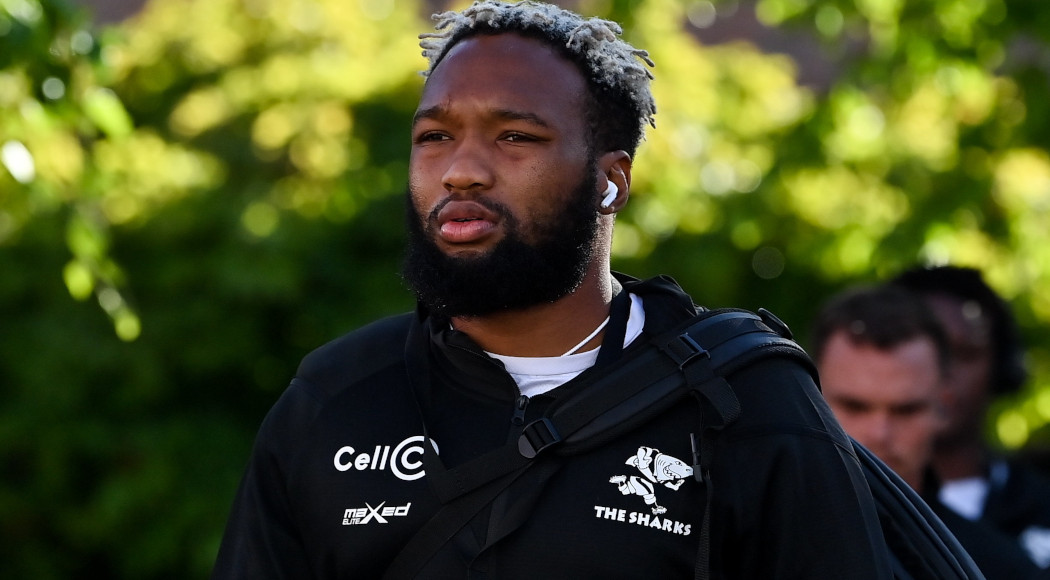
There were times in the last Vodacom United Rugby Championship season that Cell C Sharks coach Sean Everitt gave the impression that he was a bit confused about the criticism that came his team’s way.

And if that was indeed the case, it was at times understandable. The Sharks were never far away from the competition’s eventual finalists, the DHL Stormers and the Vodacom Bulls, on the log. Indeed, up until a late stage of the league phase of the URC season, the Sharks topped the local conference. It was only in the last weekend, where they lost a difficult away game against Ulster, that they relinquished that position, and even then, they still finished fifth overall.
While the Stormers and Bulls generally got praised by the critics, the Sharks were somehow invariably seen as underwhelming and disappointing. Sometimes even when they won games comfortably and by big scores.
The difference in the scrutiny though is also understandable if you look at the context. The Stormers started the season with the dominant story being the Western Province financial woes and the union going into administration. The Bulls started the competition poorly, which was when they were criticised but then generally had good momentum after that.
The extra scrutiny on the Sharks was inevitable because of the big money that they now have through their American equity partner. We’re not talking small money, even some of the foreign coaches are agog at the buying power the Sharks have, and understandably might wonder why the Sharks haven’t tried to lure Owen Farrell away from Saracens to solve their flyhalf problems.
Flyhalf of course was one of the constant themes when the Sharks were criticised and allied to that was their game plan. Next year it will be 50 years since the death of Izak van Heerden, the coach who pioneered the Natal reputation for being the running rugby province, and in truth a lot has changed since then. But Durbanites don’t forget it, and even though most weren’t even alive when Van Heerden, also for a long time a teacher at DHS, was coaching the Banana Boys in the 1960s, the culture was passed down to successive generations and so was the expectation.
The expectation did change slightly in the early 1990s, when Natal started winning meaningful trophies for the first time, a time when Everitt was impressive as an attacking centre playing for the Natal Duikers and College Rovers (I still regard him as the best centre not to have an extended provincial playing career).
Everitt is an attacking rugby exponent as a coach too, but he doesn’t have the hand on recruitment that some of his fellow South African franchise coaches do, and last year there was a perception that he had to move away from the game he had initially scripted at the start of his tenure to a more conservative approach aligned to the personnel he had at his disposal.
Much of that was actually dictated by the identity of his flyhalves. Boeta Chamberlain was the best when it came to engaging opposing defences by taking the ball at the gainline, but he lost confidence during the campaign, and the other two flyhalves Curwin Bosch and Tito Bonilla, except for a brief flurry from Bosch at a stage when he gained confidence, were both obstacles to attacking rugby with their tendency to take the ball in the pocket.
And while the Sharks had recruited some big-name forwards, like Bongi Mbonambi, the crime in the Sharks’ inability to get any kind of continuity or synchronisation between forwards and backs was the identity of some of the players out wide who were being neglected: Lukhanyo Am, Makazole Mapimpi, Aphelele Fassi and, until he was injured, Sbu Nkosi.
Nkosi has left for the Bulls, but the Sharks still have those other players, plus they have been boosted further at forward by the recruitment of Eben Etzebeth, who will join former Stormers teammates Siya Kolisi and Mbonambi when the international season is over, and Rohan Janse van Rensburg, Carlu Sadie and Vincent Tshituka.
The long and the short of it is that the Sharks have purchased a very strong squad on paper, with the one glaring weakness remaining their flyhalf resource pool, so the expectation this year will be even higher than last year. And with expectation sometimes there is a change of the rules: rule No 1 at modern Kings Park might not be that the Sharks just win, but that they do it in style.
That is the pressure that Everitt will sit with this season, but at least he will have someone to help him face down the pressure in the form of former Blitzbok coach Neil Powell, who has come in as the Sharks’ director of rugby.
The prospects certainly look bright for the Sharks. They have the money, and they have the players. But money can’t buy you culture, and that is something that Everitt and Powell will be working hard on in the coming season. If they get that right, the Sharks do have the playing material to ensure that there will again be a South African coastal team at the top of the URC pile when the season ends. Although for that to happen there will need to be a dramatic improvement in their flyhalf play.
KEY PLAYER - LUKHANYO AM
He was the skipper before he went to Japan for a few months, and he was also the Sharks’ playmaker. The 2019 World Cup hero is as important to the Sharks on defence as he is on attack. It is in the latter role though that many Sharks fans will hope to see him shine once he has recovered from the injury that at this point appears likely to keep him off the field until the summer.
RISING STAR - GRANT WILLIAMS/NTHUTHUKO MCHUNU
It is hard to pinpoint a rising star for the Sharks in the sense that some of their young players have already made it. For instance, Jaden Hendrikse is only 22 but is now ensconced as the Springbok starting scrumhalf. So, he can’t be a rising star. Grant Williams has been part of the Bok squad, but he can be classified as a rising star due to the fact he hasn’t traveled quite as far as Hendrikse just yet, and he will have an invaluable role to play during the period when the URC is played understrength because the Boks are away. Ditto Mchunu, who just a few years ago was still playing looseforward for Maritzburg College.
They talk about him as the new Beast, and this could be his big breakthrough season where he starts to live up to that promise. Like Williams, his starting opportunities might be limited to when the Bok first choices, in his case Ox Nche, are away on international duty.
Key signing - Eben Etzebeth
Provided Etzebeth gets to play more rugby for the Sharks than he did for his previous franchises and clubs, the Stormers and Toulon, he is just what the Sharks need. A big, aggressive lock who will bring enough grunt to the pack to be worth three players.