

If there is one word that seems synonymous with the Vodacom Bulls after a lacklustre season, it has to be “change”.

When Director of Rugby Jake White recently sat down with the board of the franchise to plot the way ahead, it was clear that the current status quo isn’t working.
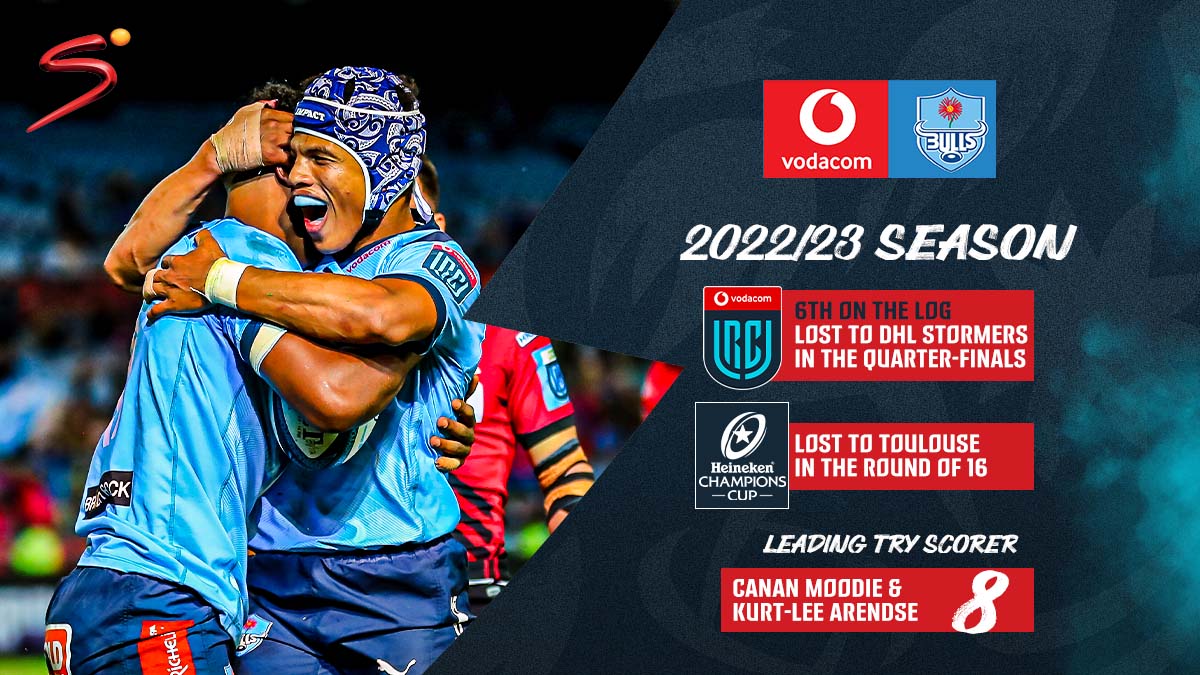
Sure, the Bulls qualified for the round of 16 in the Heineken Champions’ Cup and made the quarterfinals of the Vodacom United Rugby Championship, but their finish was a far way from the goals they set themselves at the start of the season.
White’s illness, a lack of back-up in the structures, players who lost form overnight and a hectic travelling schedule all played a part, but in reality, the Bulls were still the masters of their own fate and their chaotic handling of matters hardly helped.
If anything, there needs to be a clear plan going ahead, consistency in selection and a few better recruiting examples if they are to catch up with the top four sides in the URC and also make a go of it at Champions Cup level.
White has acknowledged this, and knows that the time for change is now. The Stormers have their number - six consecutive URC defeats makes that a moot point. They struggle overseas and if there was a bit more consistency in their results, they would have made life a lot easier for themselves.
But all that is easy to say in hindsight. The lessons from a chaotic season need to be learned and they need to adjust plans going forward so that it doesn’t happen again.
STORMERS OBSESSION MUST END
It is understandable that someone as competitive as White would take the defeats to the Stormers personally, but as it turned out, by sending URC players to both Currie Cup games against Western Province, the Bulls took a step backwards and only increased the confidence in the Cape side.
John Dobson admitted after the win last weekend that he told his players - ‘if the youngsters can do it, why would you be afraid of the Bulls?’ - in the lead-up to the quarterfinal.
With that in mind, the Bulls can make their own lives a lot easier if they won key matches during the season - and not those when White was in hospital. The Scarlets game comes to mind, where they dominated from start to finish but allowed the Welsh side to score tries almost at will from their mistakes.
The Lions and Stormers games at Loftus are also examples, where the Bulls had most of the possession, and most of the territory, dominated the setpieces and still managed to end up on the losing side.
At some point, the Bulls will get one over the Stormers and the rivalry will become a little less lopsided, but for now, too much emphasis is placed on the derby and the mindset around it. Had White gone with a second-string side to Cape Town and lost, the reaction would have been muted on both accounts. But by fronting up his URC players it backfired, and while it is understandable the poor Currie Cup season contributed to this, it played right into the Stormers' hands at the end of the day.
A STRONGER COACHING COLLECTIVE
As the Bulls were negotiating their nightmare seven weeks of games away from home over the festive and new year season, White’s medical emergency came at exactly the wrong time and hit the team hard.
His assistant coaches were forced to step up and take the responsibility of leading the side and in the circumstances did well. But it was clear the coaching collective was built around White and White only.
This holds problems going ahead for the Bulls if this continues, and while nobody could have predicted a medical emergency, the lessons of this need to be implemented as the Bulls look to make coaching appointments going forward.
The duo of Pine Pienaar and Nollis Marais will leave the side after years at the union, and the Bulls still need a defence coach to replace the loss of Joey Mongalo, who is revelling as Currie Cup coach at the Sharks.
All three of these appointments need to be made with the thought of a succession plan, and what would happen if White wasn’t around again. The failed experiment at Currie Cup level still reverberates around Loftus, and demoting Currie Cup coach Edgar Marutlulle after four games never was going to be good optics. It also spoke volumes on how short-term success overrides long-term development at the union and brought everything back to White again, who took over the Currie Cup.
X-FACTOR RECRUITMENT
White went to great lengths after the Stormers defeat last weekend to talk about the Bulls needing more X-factor players.
While this is partly true, the recruitment all around needs a rethink, and should probably fall somewhere between the Sharks’ Galactico approach of buying Springboks and the Stormers’ homegrown approach.
The Bulls have a lot of talented youngsters coming through but the constant tinkering with squads this season backfired on them and the side finally found some form when they were more consistent in selection.
Recruiting experience is one thing, but what happened to the Bulls along the way was that several of their important stars - Cornal Hendricks, Lionel Mapoe, Nizaam Carr, Wandisile Simelane, Jacques du Plessis, Johan Goosen and a few others all seemed to lose form at the same time.
Some have struggled with injury, others seem to perhaps be lacking a bit of confidence that probably came with the results. Either way, where things a season or so ago looked a lot more fluid, now those same players struggled. This has hardly helped the Bulls when they needed their stars to align more.
The coming arrival of Jannes Kirsten, Wilco Louw, Henry Immelmann and Jaco van der Walt will help with depth but other than Louw, it is difficult to see any of the others take the X-factor role that the Bulls so desperately need.
The return from the Boks of Canan Moodie and Kurt-Lee Arendse underlined what X-factor players can do for the Bulls and they need to find more of them. X-factor doesn’t always mean the scything runs in broken play, but players - up front as well - that can turn a game when it is needed.
In this, the Bulls have a lot of grunt, workhorses that do the hard work. Some of these can become x-factor stars, but there is a need for more of that in the spine of the side, and that has been lacking.
Johan Grobbelaar and Jan-Hendrik Wessels can develop into special players over the next few seasons, and Marcell Coetzee’s return will up Elrigh Louw’s game somewhat. Embrose Papier has found some incredible form of late but at 10 and 15 (when Arendse isn’t there) there are still questions.
Goosen has not been the answer and Morne Steyn retires at the end of the season. Chris Smith has been a workhorse, but lacks X-factor.
In all these positions the Bulls need to have alternatives if a player loses form, to broaden the depth in the squad and to adapt to the rigours of Europe, where the attrition rate is higher than they expected over the past two years.
The squad depth needs to be better, workhorses and journeymen have their role, but the Bulls need more players that can carve open a game.
DEFENCE NEEDS TO BE A PRIORITY
While mentioning the coaching collective above, the one glaring point for the Bulls has been their defensive woes this season. Manie Libbok carved them up in Cape Town and there is more than one example of where things went horribly wrong on defence, particularly early in a match that forced them to play catch-up and against this quality of opposition that is particularly difficult.
Mongalo’s departure left a bigger hole than it should and while Pienaar did his best, an honest assessment will tell you that there is a gulf between the Bulls’ defence and that of the Stormers, who seem to command most of their attention.
Part of that can be rectified by a new defence coach who imposes his will, but the other part needs to come from the players themselves.
The Bulls scored 613 points in the URC - the most of any team, including Leinster - but conceded an average of 25 points a game. While it is not the worst record in the tournament, it is one that can be a lot better.
The Bulls scored 63 tries and let in 61 - hardly a ratio that will impress any top team in Europe and made to look a lot healthier by the fact that their season ended with two massive victories over Zebre Parma and a second-string Leinster side.
TRANSFORMATION CONCERNS
While it hasn’t been raised publicly, behind the scenes a lot of questions have been asked about the lack of transformation in the Bulls sides these past two seasons.
White may be backing the players he believes in, but if the other three franchises have shown anything, it is that the selection of a more diverse team often has good results for a side, and pressure will come onto the Bulls to rectify this before it becomes a public issue.
Ironically, many of the X-factor players in this year’s URC have been players of colour, and there are many that can still be recruited if the Bulls look around the country. The key is to find the talent, nurture it and back it.
White has done this successfully with the likes of Moodie and Arendse, and they have become world-class players. But the Bulls need more than just two success stories if they are to silence the whispers around SA Rugby.
A PASS BUT NOT MUCH MORE
Given the season the Bulls had, the medical scare that White went through, a tough travel schedule and a first taste of European big leagues, the Bulls will feel they could have done better, but will now know what is at stake.
Their season would be a passing mark, but only just - as they at least made the playoffs of the competitions they were in and qualified for the Champions Cup again next season.
For many teams, there would be a shrug of the shoulders and contentment at the disappointments of the year.
But the Bulls make no bones that they want to win trophies - and if we have to judge them by that standard - they fell woefully short.
The beauty of sport is that there is always another season, and a time to strengthen a squad, make changes and have another crack.
White will get that opportunity, and already has massive plans to reshape his side ahead of next year. But the lessons of a tough season need to be heeded.
And a more balanced approach, consistency in selection and greater accountability all around will make a difference.