Why it has been the perfect buildup for the Boks


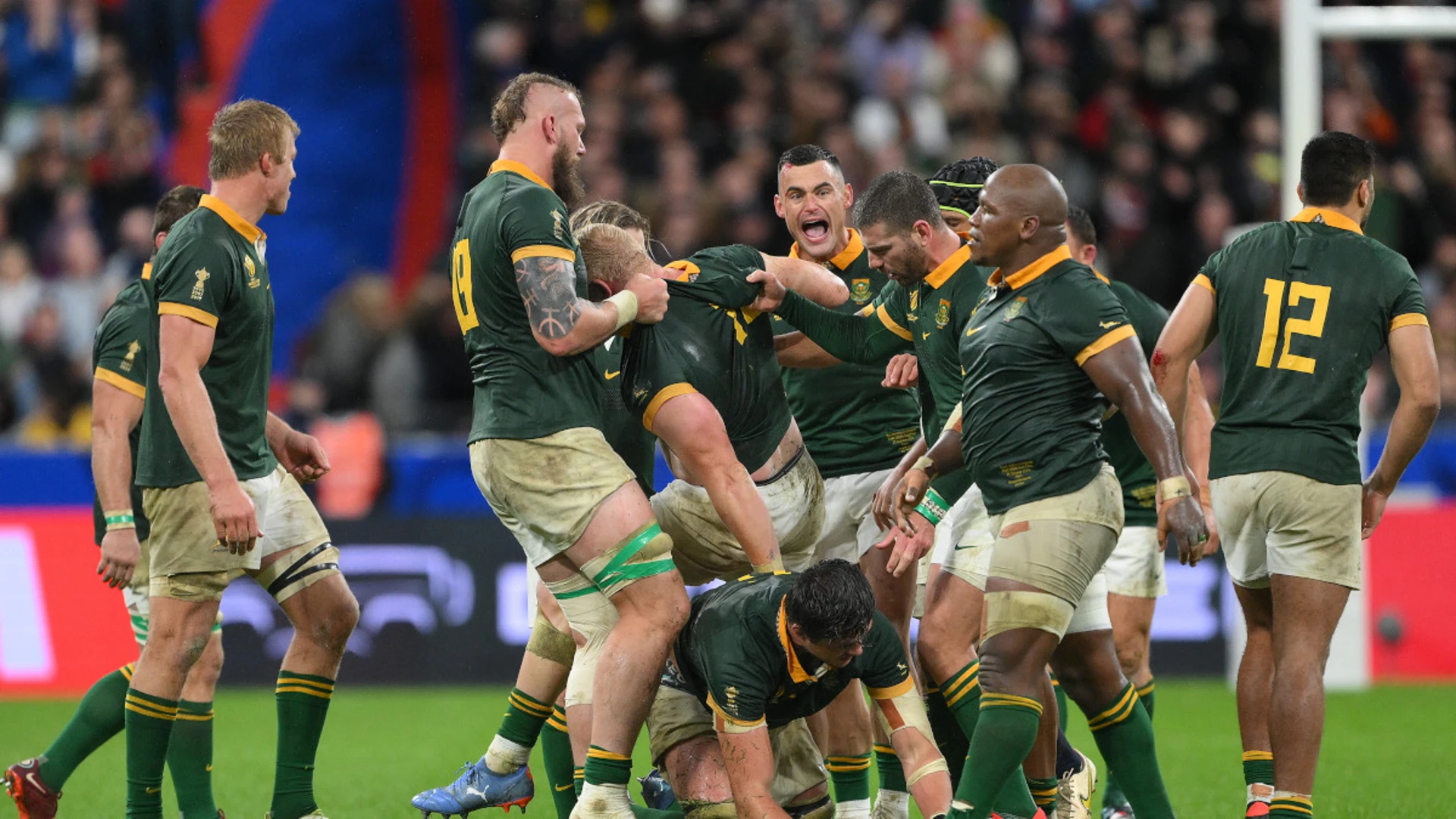
It may sound bizarre given how they had to miraculously extricate themselves twice from losing positions, but those who know the Springbok psyche and think history has some relevance will agree the champions have had the perfect buildup to Saturday night’s Rugby World Cup final.

Pundits love to make predictions for World Cup finals based on what happens in a semifinal, and the finalist that gets into the decider with the more comfortable and one-sided victory is almost always favoured. And it so often turns out to be the wrong call.
Advertisement
It happened in 2019, when the comparison between England’s thumping victory over the All Blacks and South Africa’s narrow squeak against Wales made it easy to conclude what would happen next. Only it didn’t, just as it didn’t in 1995, the last time the two historical heavyweight nations of world rugby clashed in a RWC decider.
The 1995 Boks may have been lucky to get through against France, if you recall the dispute over a disallowed try that the French felt had been dotted down by Abdel Benazzi, in a Durban semifinal that was played in even more inclement wet conditions than what we saw in Paris this past weekend.
Whereas the Boks squeaked home, New Zealand installed themselves as overwhelming favourites for the Johannesburg final when Jonah Lomu almost single handedly won their semifinal against England in Cape Town. Those differing routes to the decider meant nothing on the big day itself, just as was the case in 2019.
The only time the Boks have won a World Cup where they were comfortable winners in a semifinal was 2007, when they beat Argentina to get to a final where, compared to some of their earlier games in the competition, they were actually a little flat.
THEY WERE FLAT AGAINST ENGLAND
Flat like they were this past weekend, where it became obvious from an early stage that the coaches may have got it wrong in assuming the team didn’t need a bit of freshening up. It certainly looked like the players had been impacted by the emotion and physicality of their tight quarterfinal against France just six days earlier.
In the Paris game, they went through what New Zealand went through in the Yokohama semifinal against England in 2019. The Kiwis had produced their best game of the tournament in thumping Ireland in their quarterfinal at Tokyo Stadium. They didn’t expect England to be as good as they were in that one-off clash, and they paid for it.
The Boks nearly paid for it this past weekend but they didn’t, and now having come out of that experience, and being in the final and within 80 minutes of making history by becoming the first Bok team to retain the Webb Ellis trophy, what they went through to get to the decider should be to their benefit.
What is indisputable is that they have the BMT, the mentality, for they showed that in spades in both playoff games.
THERE WAS A LOT WRONG
Make no mistake, there was a lot wrong with the South African performance against England. When it became obvious that the game would be played in wet weather, the predictions of a big win went out of the window. Weather is often a leveller, particularly when you are playing against a team that loves those conditions.
Which England do, because the kicking orientated rugby that is required when it is wet is what they do. As an attacking team they are impotent, and their best chance of beating South Africa was to build their score in increments of threes.
Looking back at the England history at World Cups, it has often been thus. The only year they won the World Cup, 2003, was also the only time they have ever crossed the Bok line in a World Cup game. Will Greenwood scored a try in the Pool game in Perth, and that was the only try they’ve scored against the Boks in a World Cup game. And the two nations have met six times since their first RWC meeting in 1999.
A wet weather game suits a team that works in increments of threes, and it’s why the Bok decisions not to respond with three pointers of their own when they were presented with opportunities to respond in kind to Owen Farrell’s early successes from the tee were not clever.
FORTUNATELY BETTER AT FINDING WAYS TO WIN THAN TO LOSE
Just as England played the perfect wet weather game, so the Boks did the opposite. The Boks have shown that finding ways to win is one of their big strengths. They might not have to require that mentality as much as they do though if it wasn’t for the other habit they’ve developed just recently, which is finding ways to lose.
Fortunately for South Africa they are better at finding ways to win than finding ways to lose, which is why they are still in the competition. But they would have learned from the mistakes they have made thus far in the playoffs and there is no question hovering over their motivation this week - not only is it a final, it also against New Zealand. The one team they have always respected.
ONE-SIDEDNESS OF OTHER SEMI MAY WORK FOR THEM
And it probably does work for them that the All Blacks were so comfortable in beating Argentina, with the different paths taken through the semis partially erasing the memory of what happened the last time the two sides met. That was the 35-7 Bok win in a warmup game in August that registered as the biggest All Black defeat in history.
A team as mentally strong as the Boks shouldn’t have a problem with being favourites, but it does appear they are better off when they are the underdogs. It also always helps South African teams when people poke the bear by creating the sort of noise that has been in evidence since the semifinal.
There’s nothing more committed and determined, more filled with steely resolve and therefore dangerous, than a Bok team that finds itself in a “it’s us against the world scenario”. Director of rugby Rassie Erasmus sometimes gives the impression he looks for that, seeks out some kind of adversity that isn’t there.
This week he doesn’t have to look too hard, it can be accessed from media comment.
In 2019 the motivation was being written off and to some extent also the UK media’s criticism that the Boks’ perceived game plan was in some ways “anti-rugby”. Indeed, it is ironic that the Boks should have been criticised four years ago by the same UK media people who are praising England’s kicking orientated performance of two days ago as being among their “top three or four performances of all time”.
There again it’s been obvious for a long time that objectivity has been sacrificed by people who should know better but are just so desperate for the Boks to lose. It will suit the Boks, just like it will probably suit them that they didn’t go into this final off a resounding win. Those who know the Boks will know the dip in performance last week should make them more dangerous.
Advertisement