TECH TALK COLUMN: Baku - Monaco, but with a straight


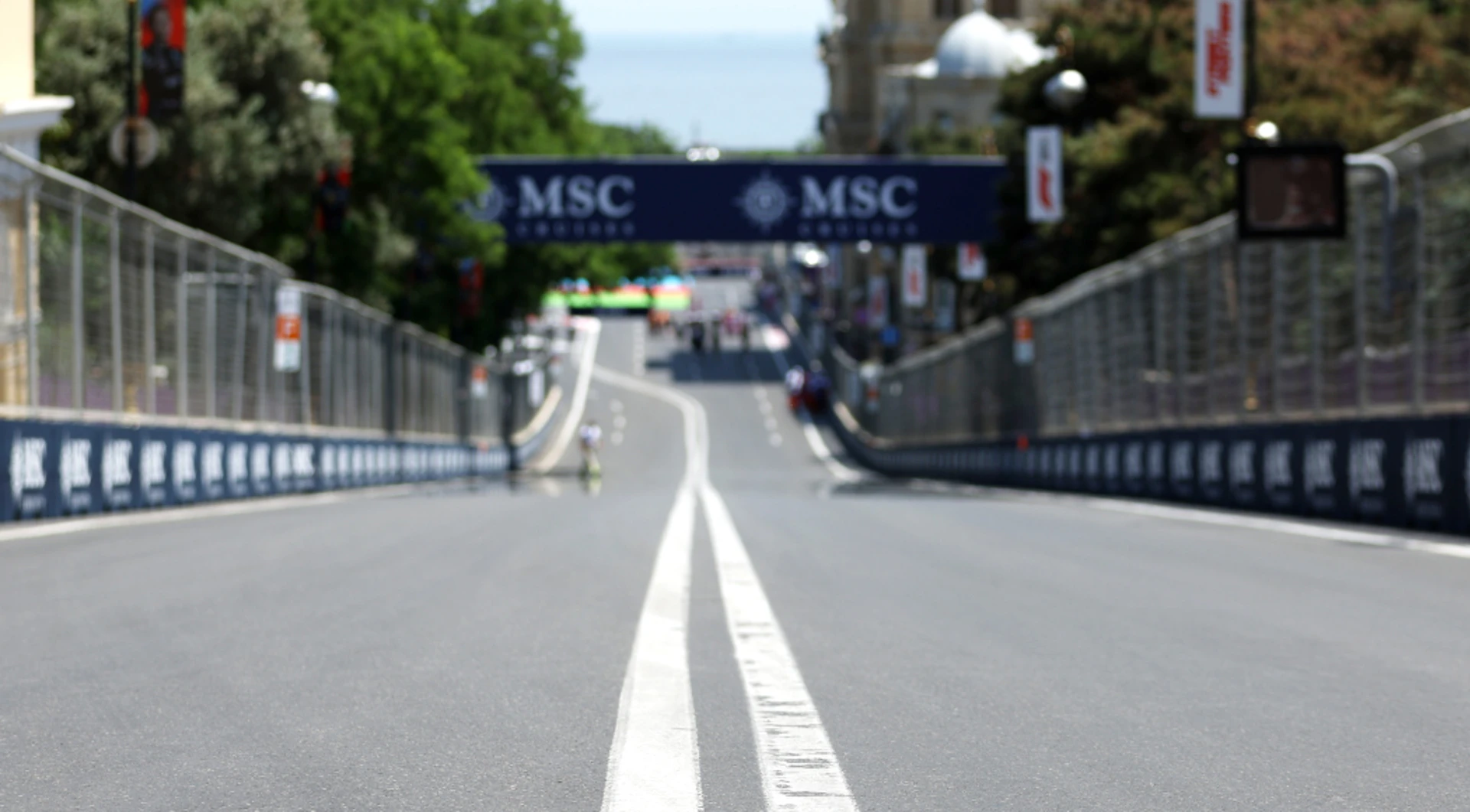
The one thing that the famous streets of Monte Carlo don’t really offer is a proper straight. This means that the Monaco Grand Prix is an exclusively tight affair, with hardly any space for a DRS zone, never mind a passing opportunity. On the one hand, Monaco’s layout can make for monotonous races, though a dash of rain can certainly put the cat among the pigeons. But realistically, what Monaco needs is a big, beefy straight – which is exactly what we have at the Baku City Circuit in Azerbaijan.

The circuit has featured on the F1 calendar since 2016, when it hosted the European Grand Prix. Since then, it has been known as the Azerbaijan Grand Prix, and it has been the scene of some wild moments. Who can forget Daniel Ricciardo beating Valtteri Bottas and Lance Stroll for the win in 2017? Or the tyre issue that put Max Verstappen into the barriers just five laps from the finish last year – and that while he was comfortably leading the race.
Advertisement
But let’s get back to that straight – the one that Monaco doesn’t have. On paper, it makes for exciting racing. The circuit is 6km in length, features two DRS zones, runs anti-clockwise and offers 20-ish turns. The start is a drag down the final third of the straight, where Turn 1 allows multiple cars to race side-by-side, before things tighten up at Turn 2. The shorter back-straight follows, before the cars enter the tight part of the circuit through the Icheri Sheher old town part of the city. It is narrow, framed by medieval walls, and reminds of nothing more than Monaco.
What makes this circuit a challenge, beyond the obvious tight confines and narrow barriers, is the car setup in terms of downforce. In a previous column I explained in broad strokes how a modern F1 car generates downforce, but also mentioned that more downforce equals more drag, especially in fast sections. This is hardly a problem in Monaco, which has no fast straights – but in Baku it is a different story altogether.
Here we have two distinctly different parts of the circuit: The fast straights, followed by the tight streets around the old town. For one section you’d like as little downforce as possible; yet for the other section more downforce is critical. With active aero not an option due to the regulations – with the sole exception of DRS, when applicable – the question is which part of the circuit should you set up for?
One might be tempted to aim for a happy medium: Not too much downforce, so the car is fast on the straights, but just enough to offer some additional grip in the tight sections. But as Adrian Newey allegedly once said: “A happy medium means your car is sub-optimal everywhere.”
Essentially then, the teams will need to take their pick: Either run the wings more upright for maximum downforce in the tight sections; or run them flat to gain as much straight-line speed in the fast sections. As ever in F1, however, it isn’t just a straight-forward roll of the dice.
The clever people in each team will have worked out how much time they can gain down the straights, versus the time loss in the tight section – and the opposite, of course. This should give them a net result, which should make the choice obvious. But then there are the tyres…
If you run with low downforce and maximum straight-line speed, you end up with lower grip in the tight section. This, in turn, puts more strain on the tyres, as they scrub across the track surface in search of purchase, which makes tyre choice critical. Remember, teams must use at least two different tyre compounds during each race, so it isn’t quite as simple as picking a tyre.
Let’s assume for a moment that all the tyres are equal throughout the race (which they most definitely are not), then it is still clear that running low downforce is likely to negatively influence your pit strategy, possibly forcing you to three-stop, since the tyres are going off quickly due to the tight section taking its toll.
Which brings us to the only logical setup: Run more downforce, and sacrifice a bit of speed down the straights. I’m willing to bet that both Red Bull and Ferrari will opt for this configuration this weekend, possibly playing around with some iterations during the practice sessions. Mercedes? Well, they’ve always been a pretty serious outfit, and I suspect that they’d rather aim for solid results, than gamble on a low aero setup.
As for the rest of the teams: It is anyone’s guess. The likes of McLaren and Alfa Romeo will know that being on a different strategy to the frontrunners might just offer them a chance for something special.
The weather is unlikely to play a role this weekend, with no rain or strong winds predicted. So, it all comes down to each team’s individual performance, strategy and the execution of that plan. With that said, I’m certain we’ll see at least a few safety cars, if not a red flag, and that may also bring a curveball or two. Whatever happens, this weekend’s race is sure to be anything but dull.
Waldo van der Waal is a motoring journalist with nearly three decades of experience. He has worked as an F1 correspondent for various publications over the years, including WIEL and DRIVE magazines, in the late nineties. Since then, he has travelled the globe to follow some of the greatest motorsport events on the planet, including many F1 races and Le Mans. He has been closely associated with the Dakar Rally for the last ten years, worked with Fernando Alonso during his attempt at the race, and remains in touch with the wonderful world of Formula 1.
AZERBAIJAN GRAND PRIX BROADCAST DETAILS
Friday, 10 June
FP1 | 12:55 | SS Motorsport
FP2 | 15:45 | SS Motorsport
Saturday, 11 June
FP3 | 12:45| SS Motorsport
Qualifying | 15:50| SS Motorsport
Sunday, 12 June
Race | 12:55 | SS Motorsport
Advertisement