Mokone never reached his full potential


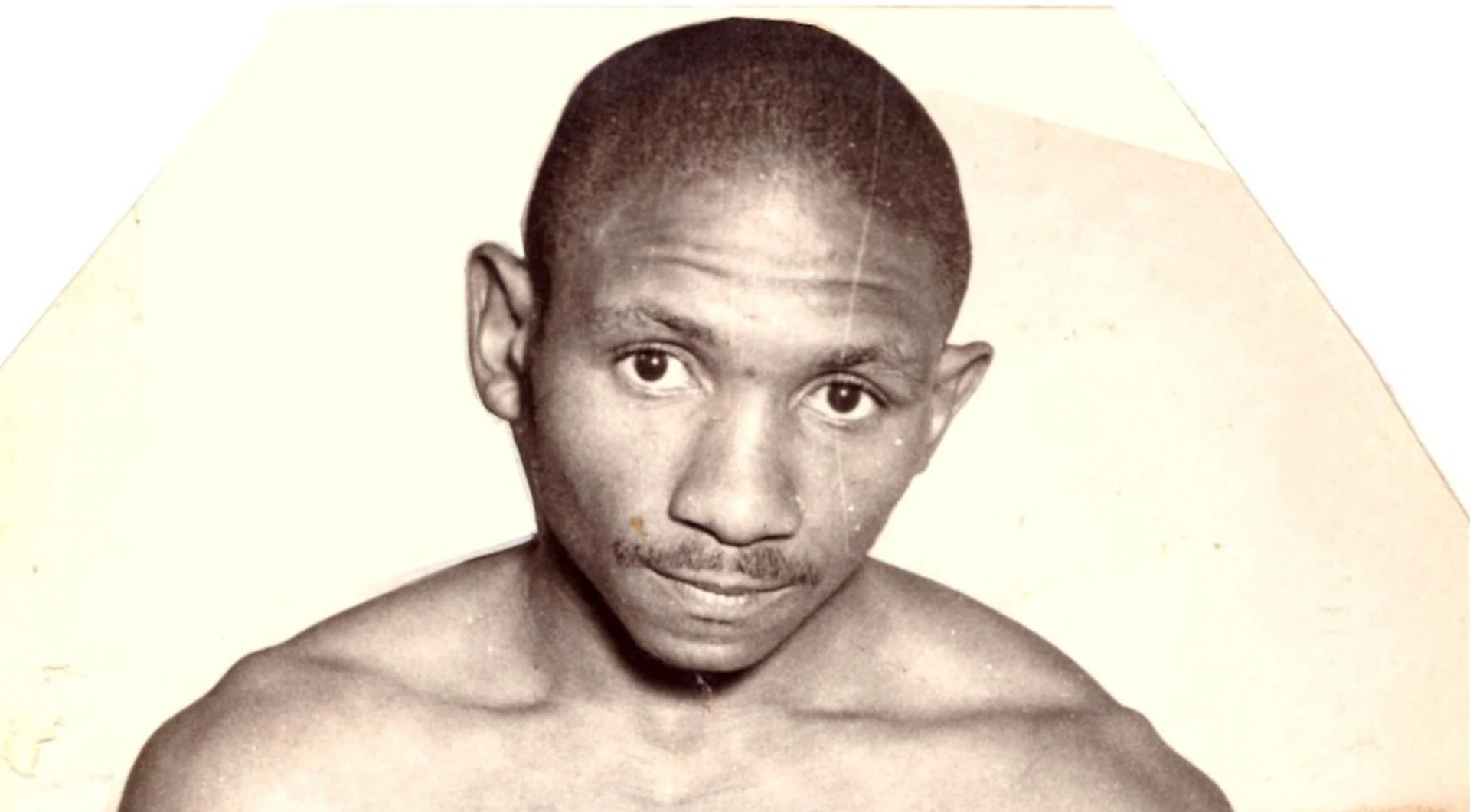
Elijah Moshashe Mokone was considered by many to be one of the most scientific and all-round fighters in the early 1950s after winning the South African lightweight and featherweight titles, when there were only eight recognised weight divisions.
Born on 14 May 1928 in Jagersfontein, a small town in the Free State, he spent most of his boxing life in Evaton a township north of Sebokeng and could have been one of the all-time great’s of the South African ring had it not been for his lack of temperament to be able to achieve success outside his own country.
Technically, Mokone had all the skills and early newspaper reports describe the lithely-built fighter as one of the most competent ring men seen in the South African ring. He was nicknamed “Ellis Brown” This was a quality, well-known brand of coffee in the early 1950s and the nickname was in keeping with the quality ring craft and ability “percolated” by Mokone.
Advertisement
He made his pro debut on 12 October 1951 at the Bantu Men's Social Centre in Eloff Street Extension, Johannesburg, with a six-round points win over Simon Mbatha and remained unbeaten in his next eight fights, which included a win over Theo Mthembu who went on to become one of South Africa’s top trainers and guided Jacob “Baby Jake” Matlala to four world championships in an outstanding career.
When asked about Mokone, Theo said “He was a terrific fighter and I saw him fight many times, very smooth and clever, but he definitely lost something after his return from that trip to England and the death of his wife.”
He suffered his first loss as a professional on 13 November 1952 on a ninth-round retirement against Young Seabela in Cape Town.
Trained by Richard “Skappie” Samuels through 1952 and 1953 he continued knocking over his opponents with some displays of superb boxing and punching power, before capturing the South African lightweight title from the rugged Johannes Mahlangu (a.k.a. Congo Kid) with a 12-round points decision in July 1953. He made two successful defences of the title before dropping down to featherweight and winning the national title from Alby Tissong and then embarking on the disastrous trip to England.
When Mickey Duff, then manager of Solly Cantor who was in South Africa for his contest against Johnny van Rensburg in 1953, saw Mokone beat Alby Tissong for the South African featherweight title in Cape Town, he was impressed by the stylish Mokone.
Duff offered Mokone a series of fights in Britain, which would possible have led to a crack at the British Empire title, which was highly prized in the early 1950s. Mokone, who had only recently gotten married, reluctantly agreed to fly over to Britain. The trip turned into a total disaster as Mokone became terribly homesick, hardly eating or doing any training and then he refused to leave his hotel room. Duff even called in Jake Tuli, one-time British Empire flyweight champion, to assist his fellow countryman, but he and others failed to lift the depression from Mokone.
On his return to South Africa and after the tragic death of his wife, Mokone continued to show his mastery in the ring but unfortunately the spark was gone.
In 1954 Mokone defended his South African lightweight title on three occasions, all in Durban, beating Young Seabela on points in January, and in May he scored another 12-round points decision in a return match with Alby Tissong before closing the year with a convincing tenth-round stoppage over the durable Hank Mahlo. In between he also made a successful defence of his featherweight title with a stoppage win over Jerry Moloi.
Despite the sadness in his life Mokone continued with his boxing career and was good enough to make five successful defences of the lightweight title and one defence of the featherweight title before losing the latter crown to his old adversary Alby Tissong, being stopped in the 11th round. Mokone, however, came back early in 1956 to regain the featherweight title from Tissong in their fourth clash and then lost the lightweight title in March of the same year when he was defeated by Jason Rabebe.
In 1957 Mokone bounced back with two outstanding wins over a young Enoch “Schoolboy” Nhlapo, who was to become one of the legends of the South African ring. In their first fight in March he retained the featherweight title and in June of the same year outscored Nhlapo in a clash for the vacant South African lightweight title.
When asked about these fights Nhlapo said it was still early in his career when Mokone beat him on those two occasions, but he could take nothing away from Mokone who was a talented and outstanding boxer.
Sadly this was Mokone’s last moment of glory and it was downhill from there as the shell of the great fighter never won another fight, losing five in a row, all inside the distance. He lost the lightweight title to Johnny Linda on a stoppage, and in March 1959, at the age of 30, lost the featherweight title to Sexton Mabena, being stopped in sixth. This was his last fight before an attempted comeback in July 1963 when, only going through the motions, the once great fighter, handicapped by a leg injury, was knocked out in three rounds by Steve Segole.
This was a sad ending to the boxing career of a very talented fighter who could have achieved so much more.
According to Boxrec he finished with a record of 32-9; 17.
Mokone was one of the best equipped fighters produced in South Africa and, after his ring career was over, he became a bus driver. His dream of becoming a minister of his church was also never realised.
Disillusioned and lonely, Mokone eventually withdrew from society and, after a long illness, he passed away on 28 October 1987 at the age of 59, a long forgotten hero of the prize ring.
Advertisement